Free toolkit
The figures, in full color
The printed interior is grayscale, because a book that costs less reaches more people. These are the same figures in full color and at full size, in the order they appear in the book. Every one is yours to download and reuse in your own material, with credit.
Jump to a figure
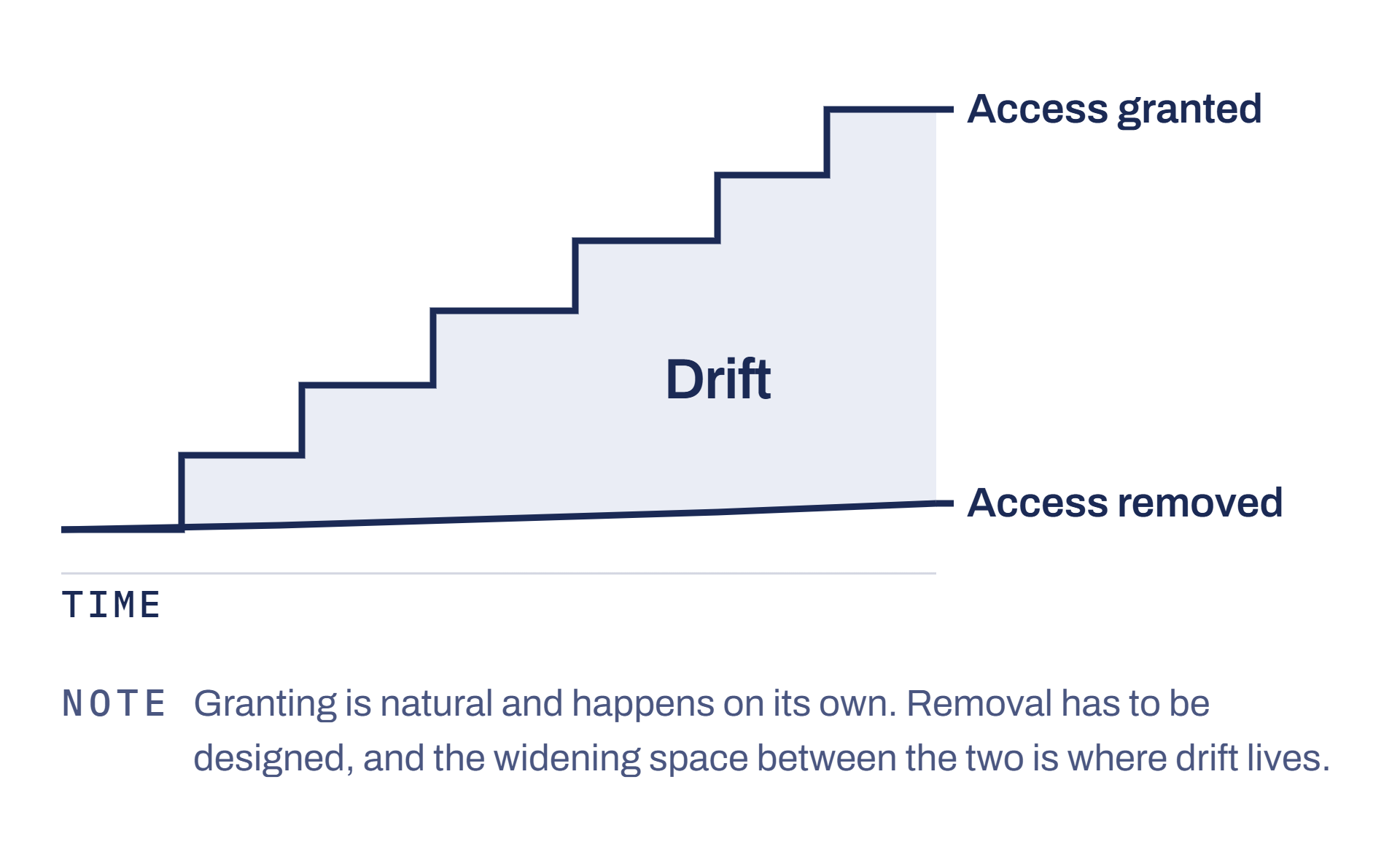
I.1Drift is what accumulates between what identity grants and what it takes back.
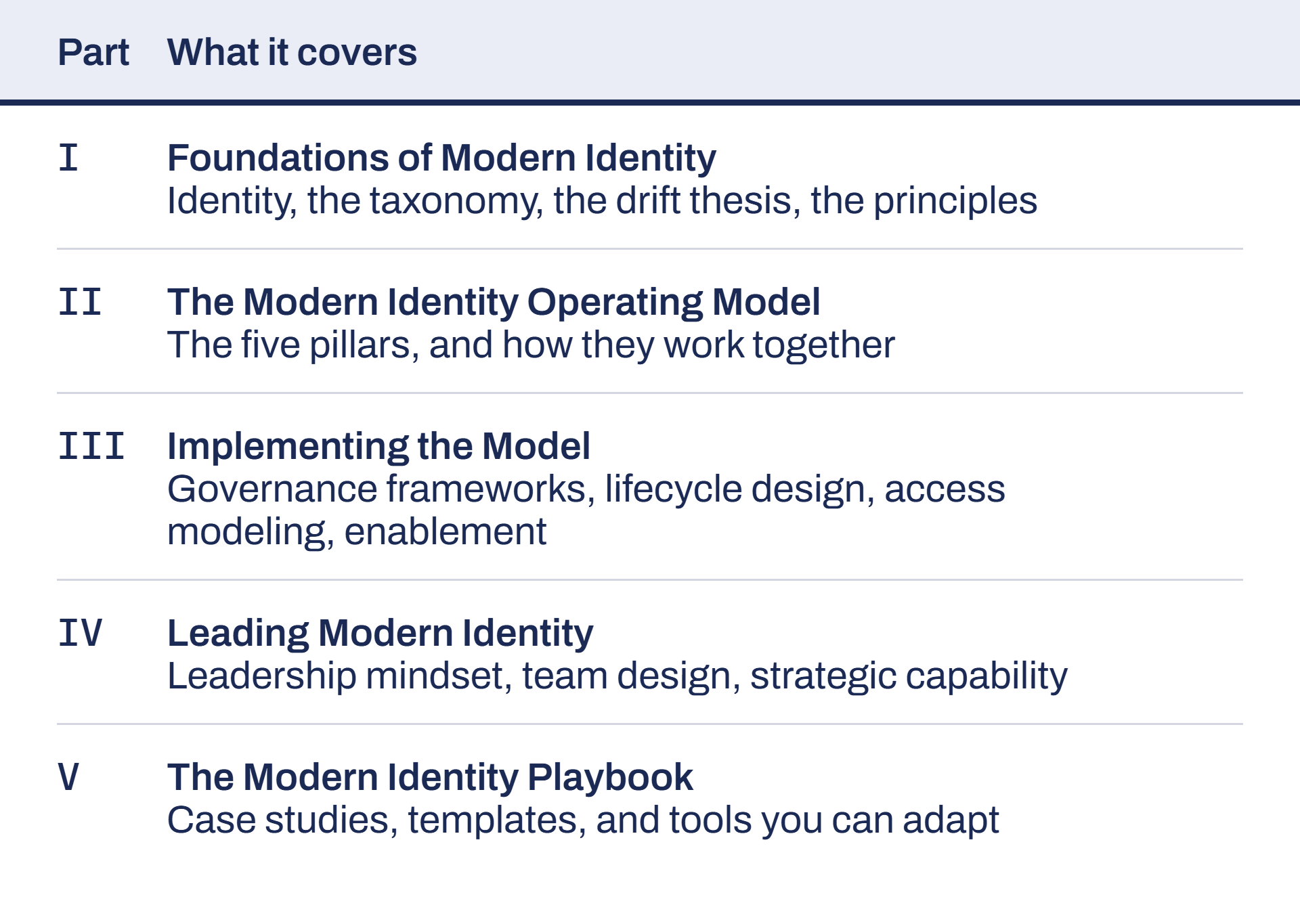
I.2The book's five parts, from foundations to playbook.
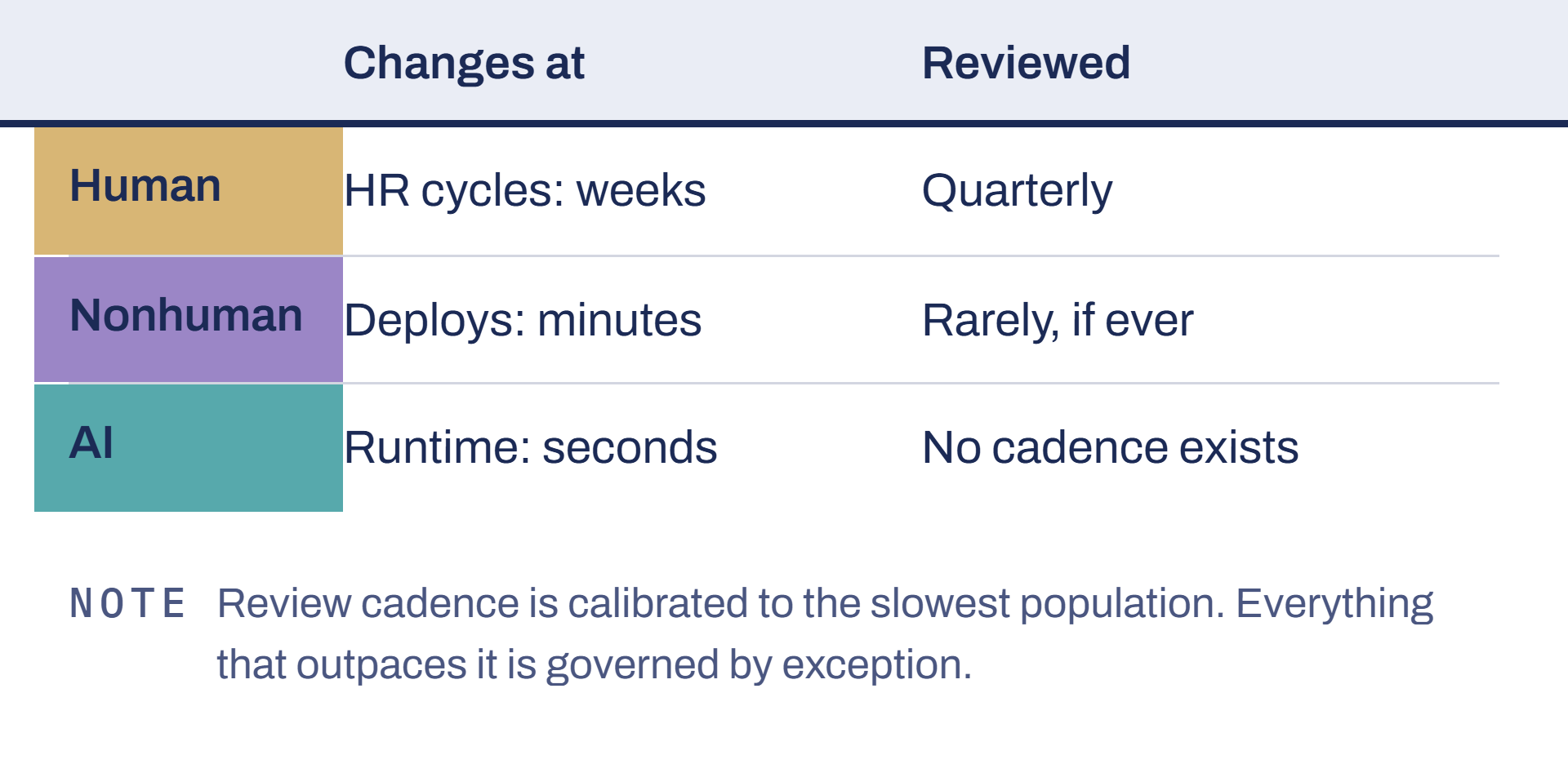
1.1The modern identity taxonomy: human, nonhuman, and AI.
1.2The structure that makes drift visible.
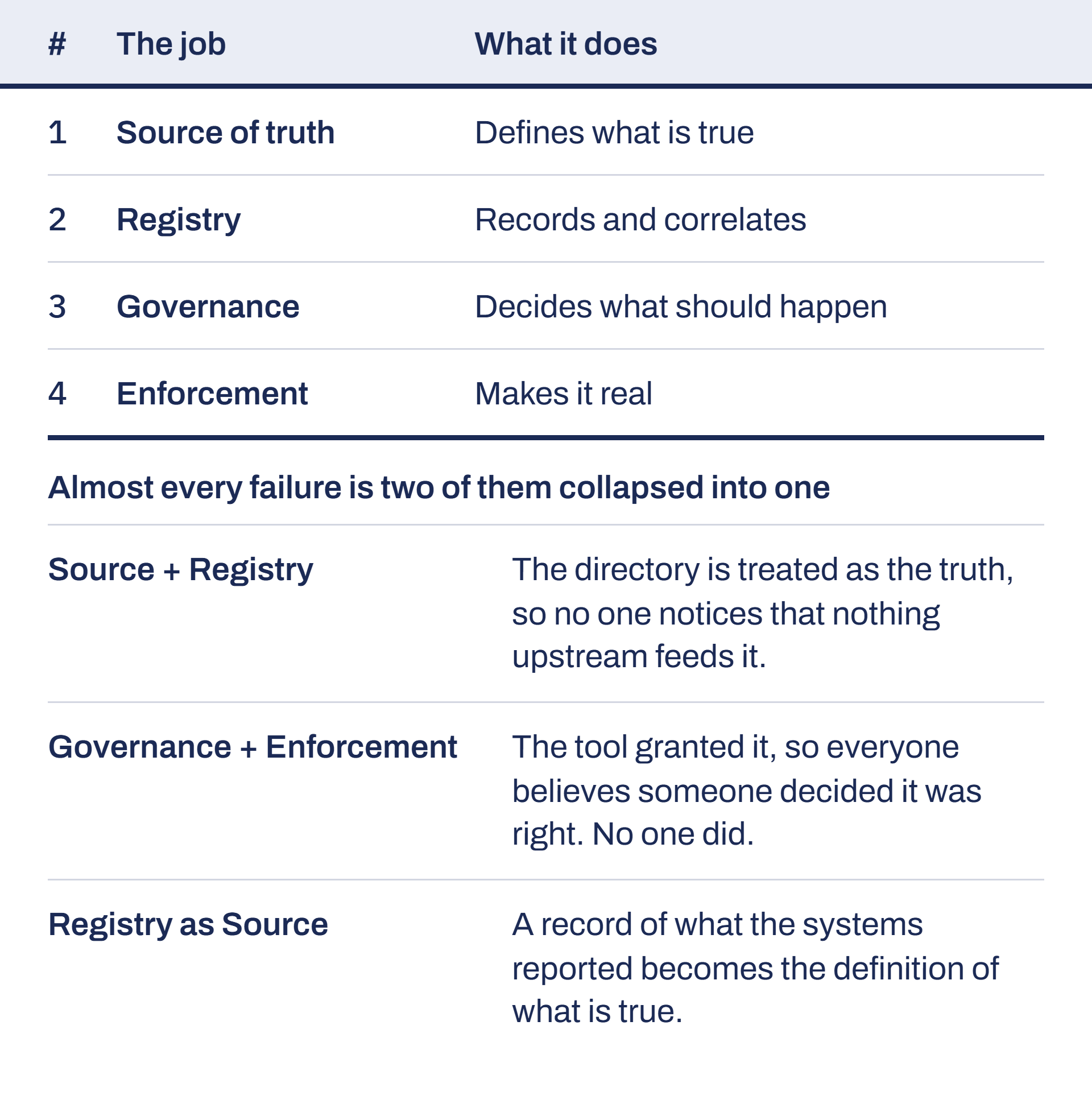
3.1The four jobs every identity system must do, and the three collapses that break them.
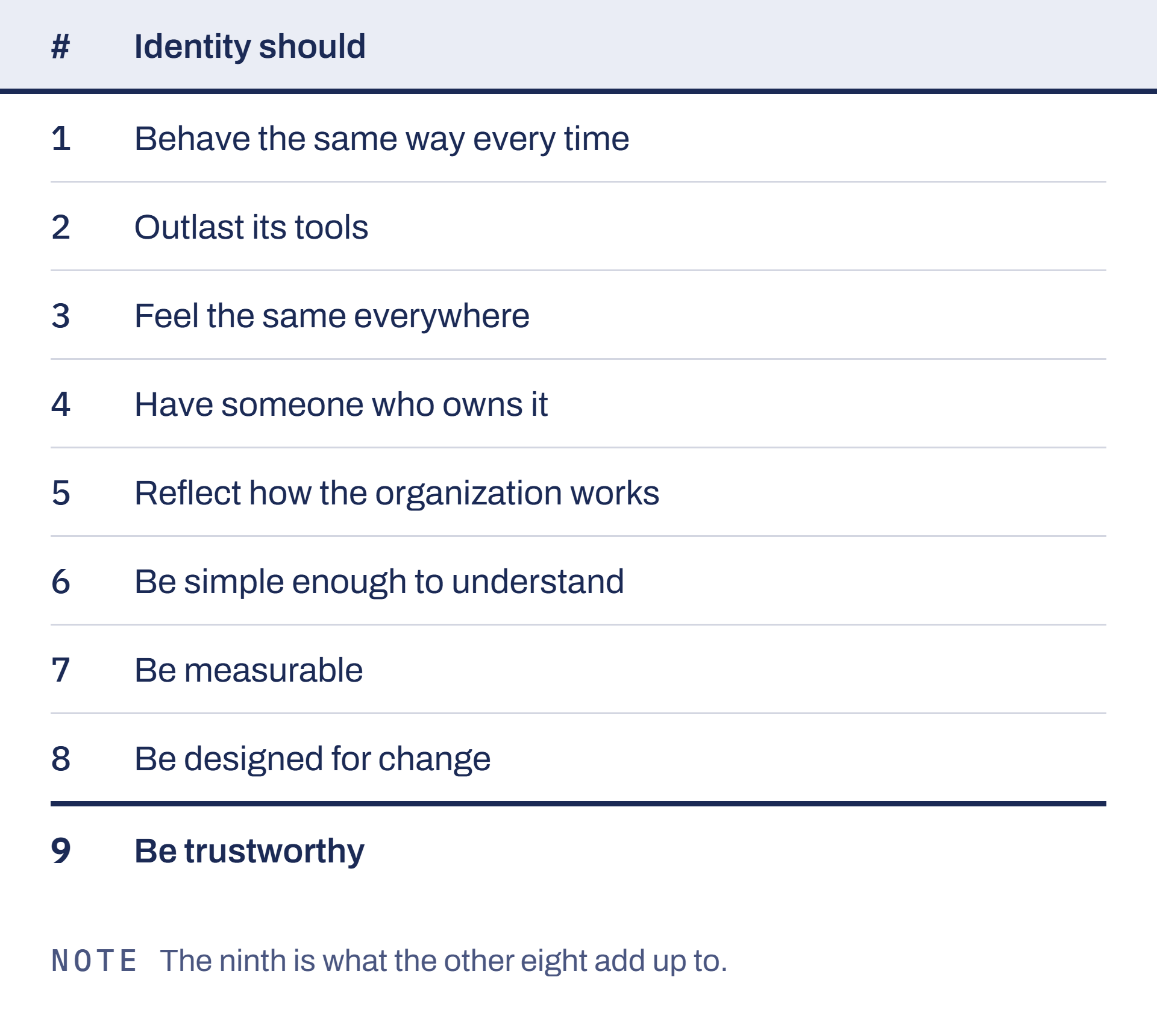
4.1The nine principles that hold identity together.
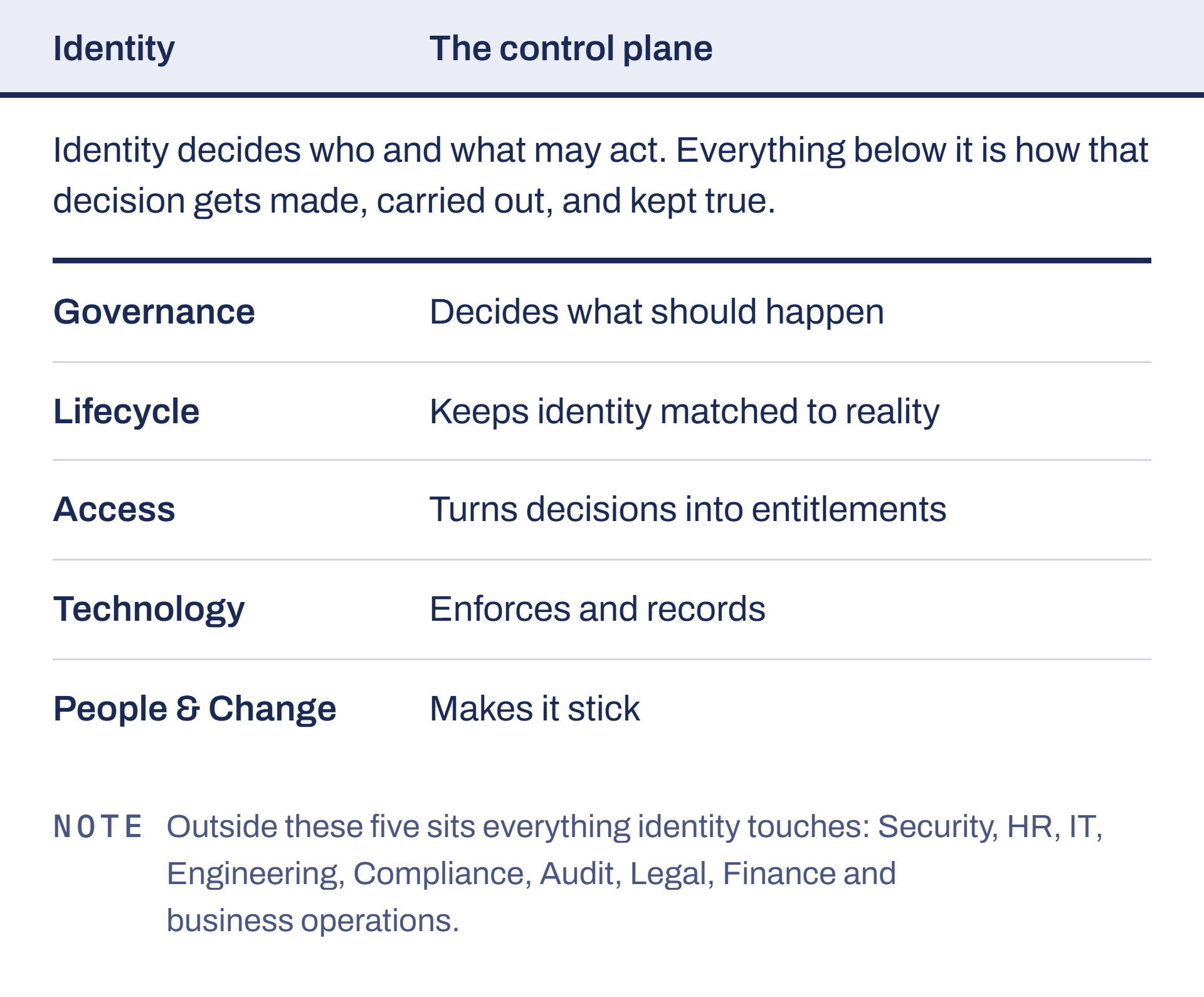
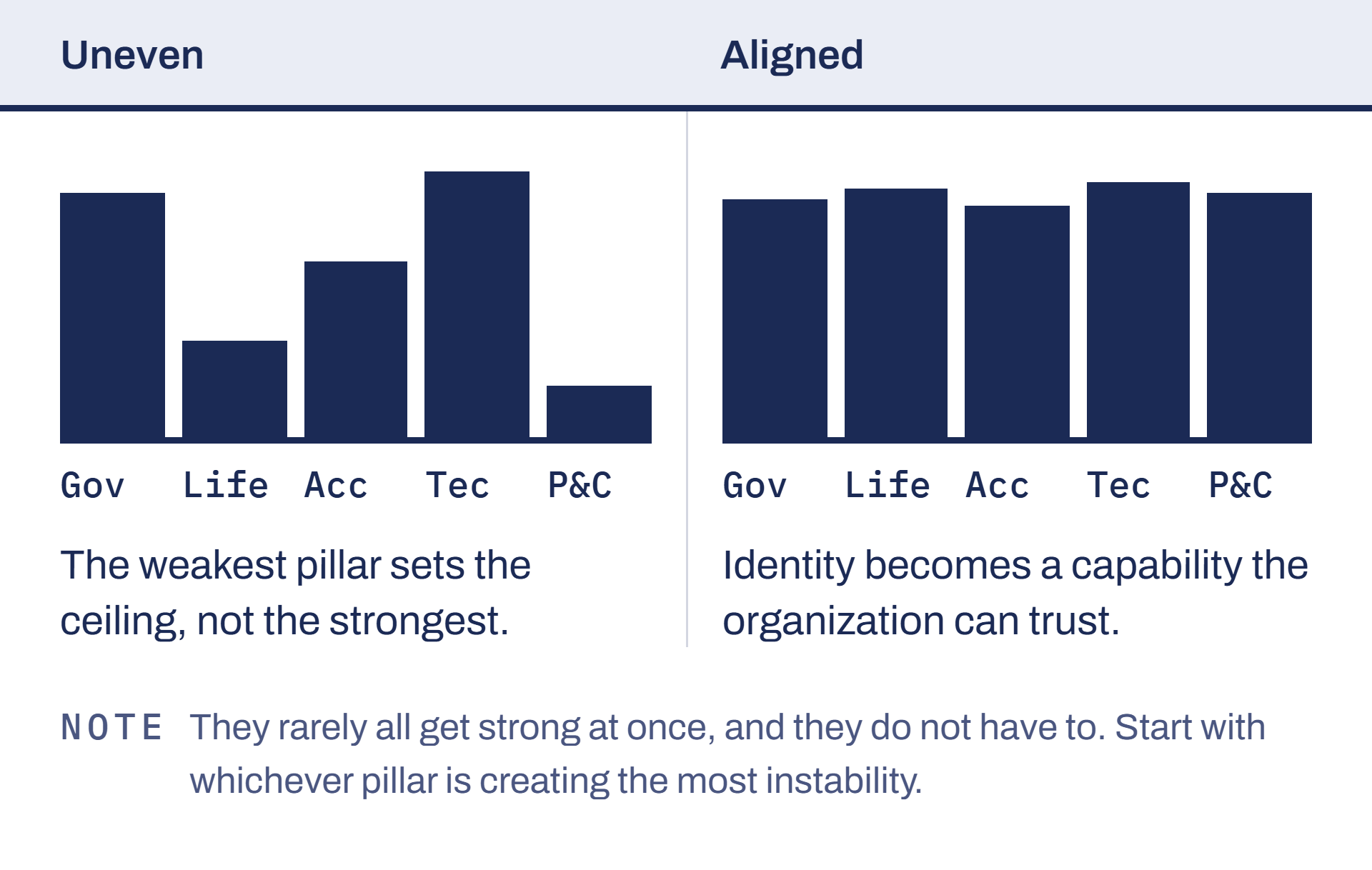
5.1The five pillars, uneven and aligned.
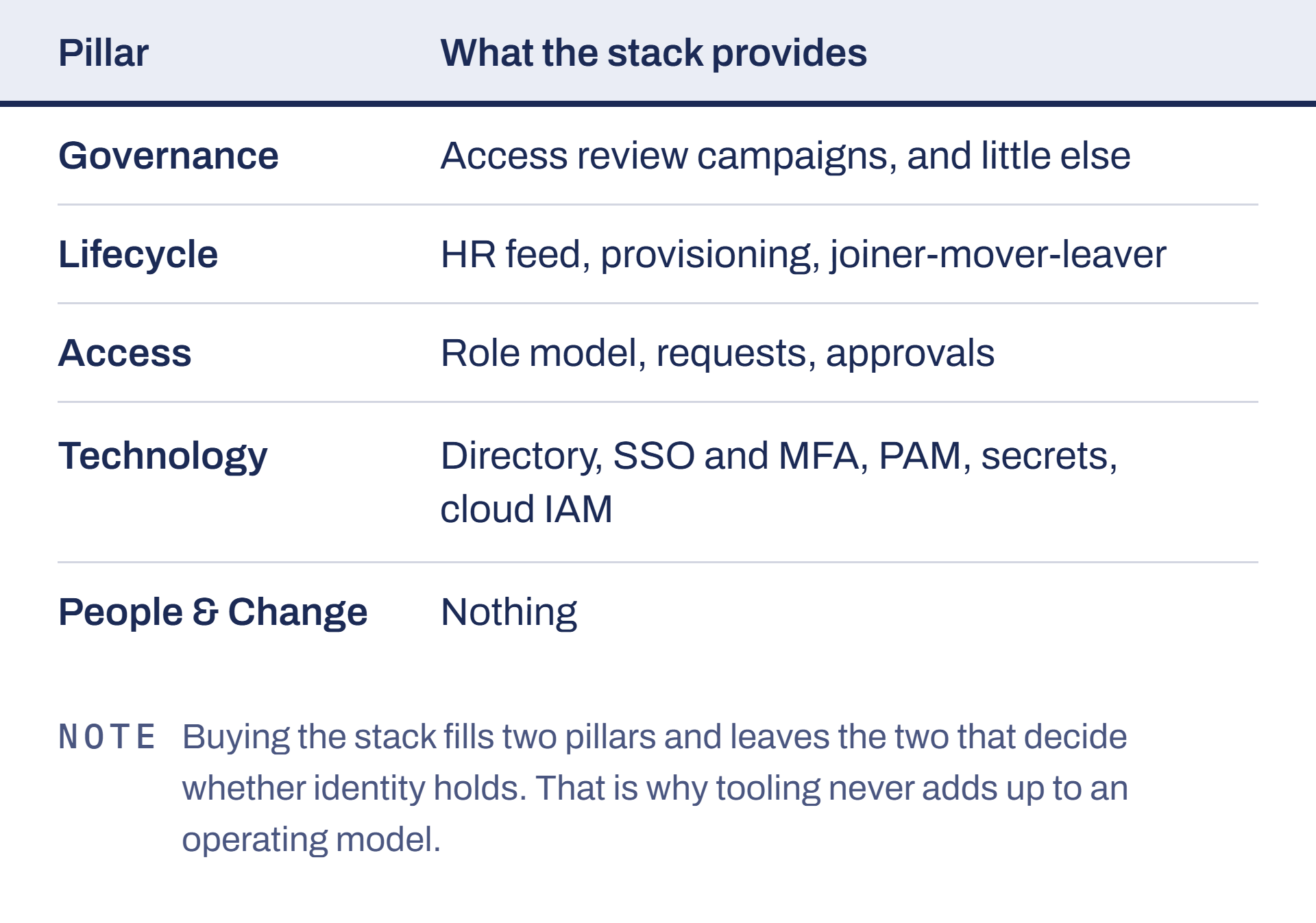
5.2Where the traditional stack lands on the five pillars.
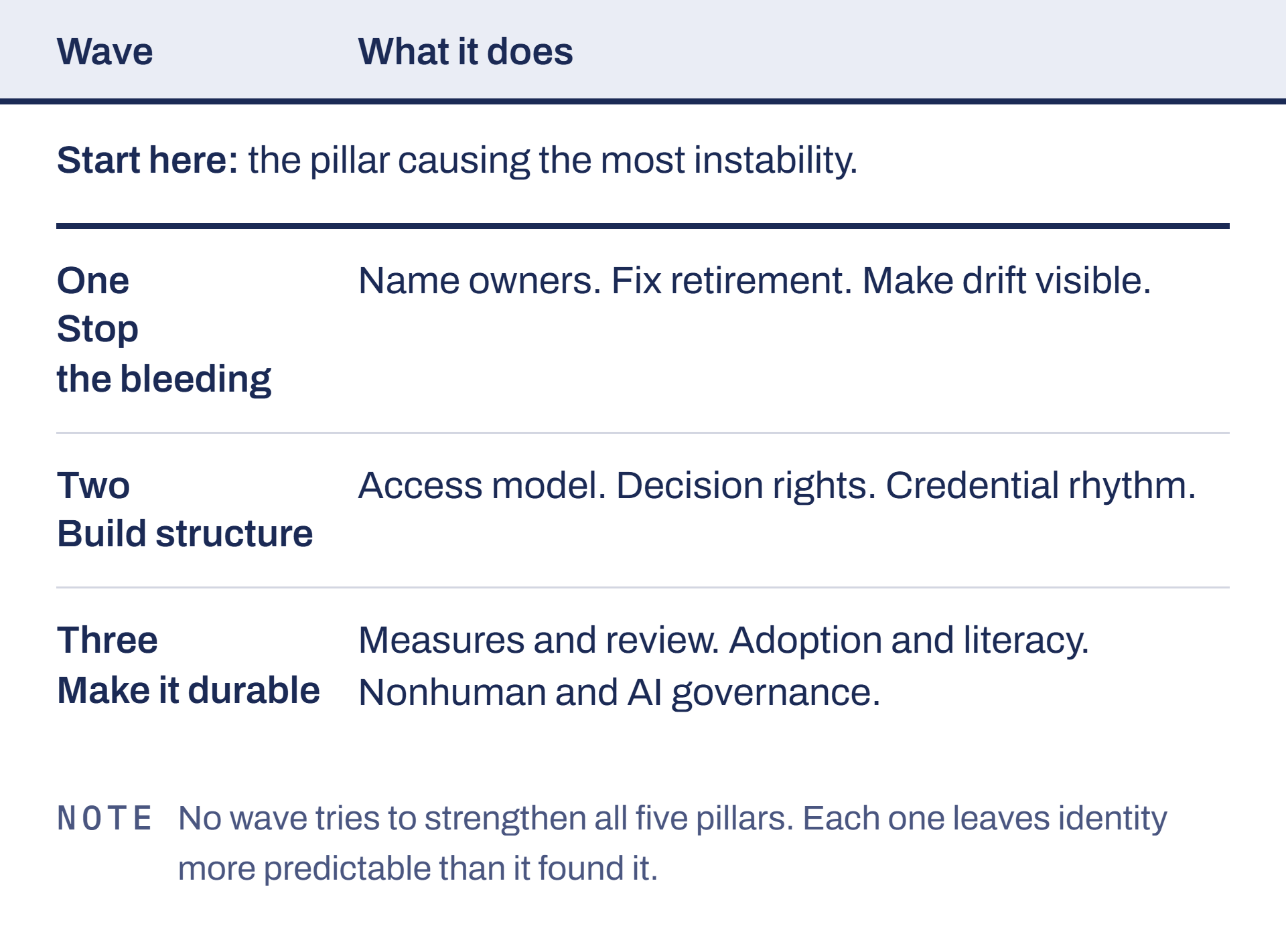
5.3Choosing a starting pillar and building in waves.
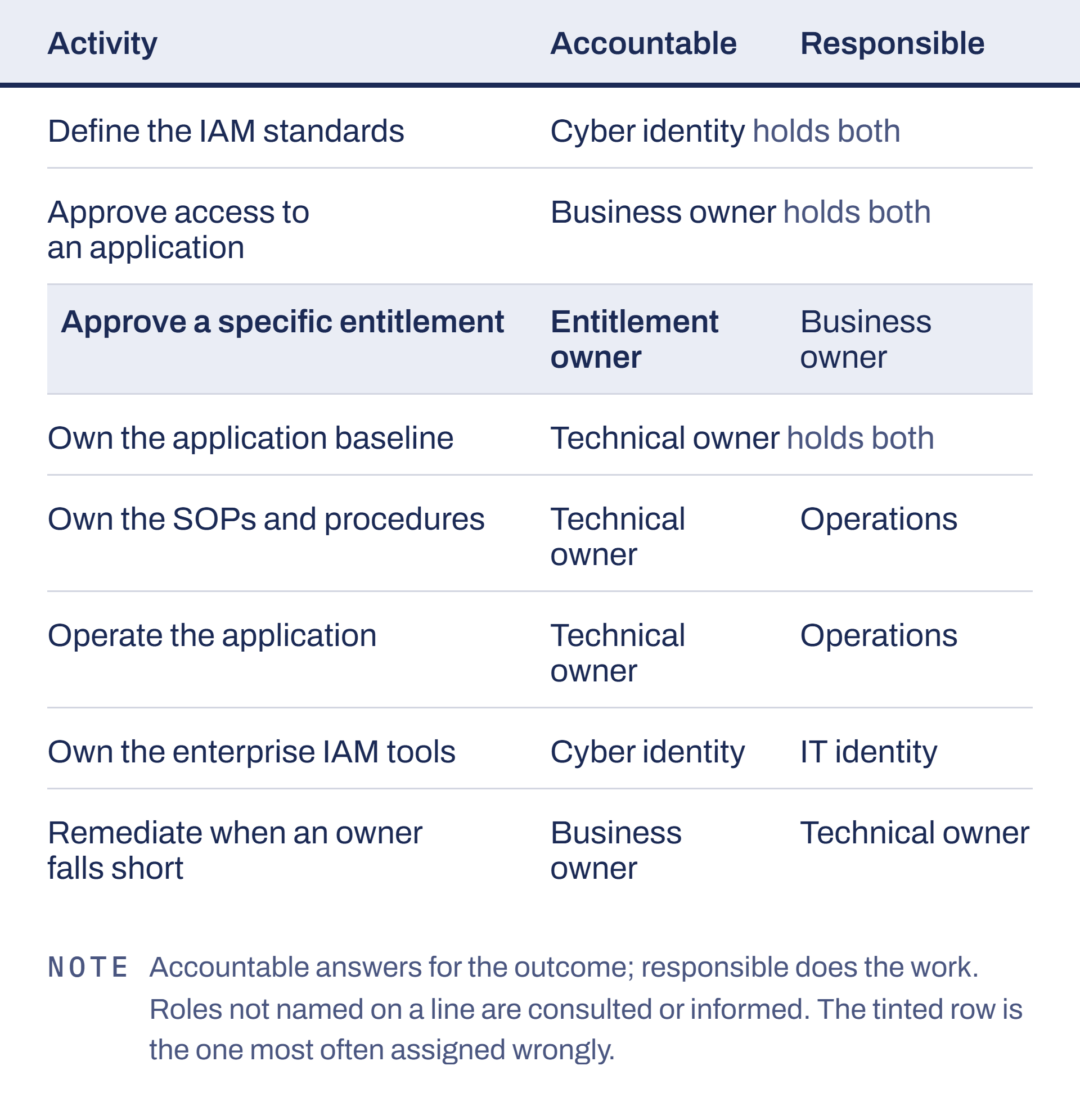
6.1Decision rights for the eight activities every identity program has to assign.
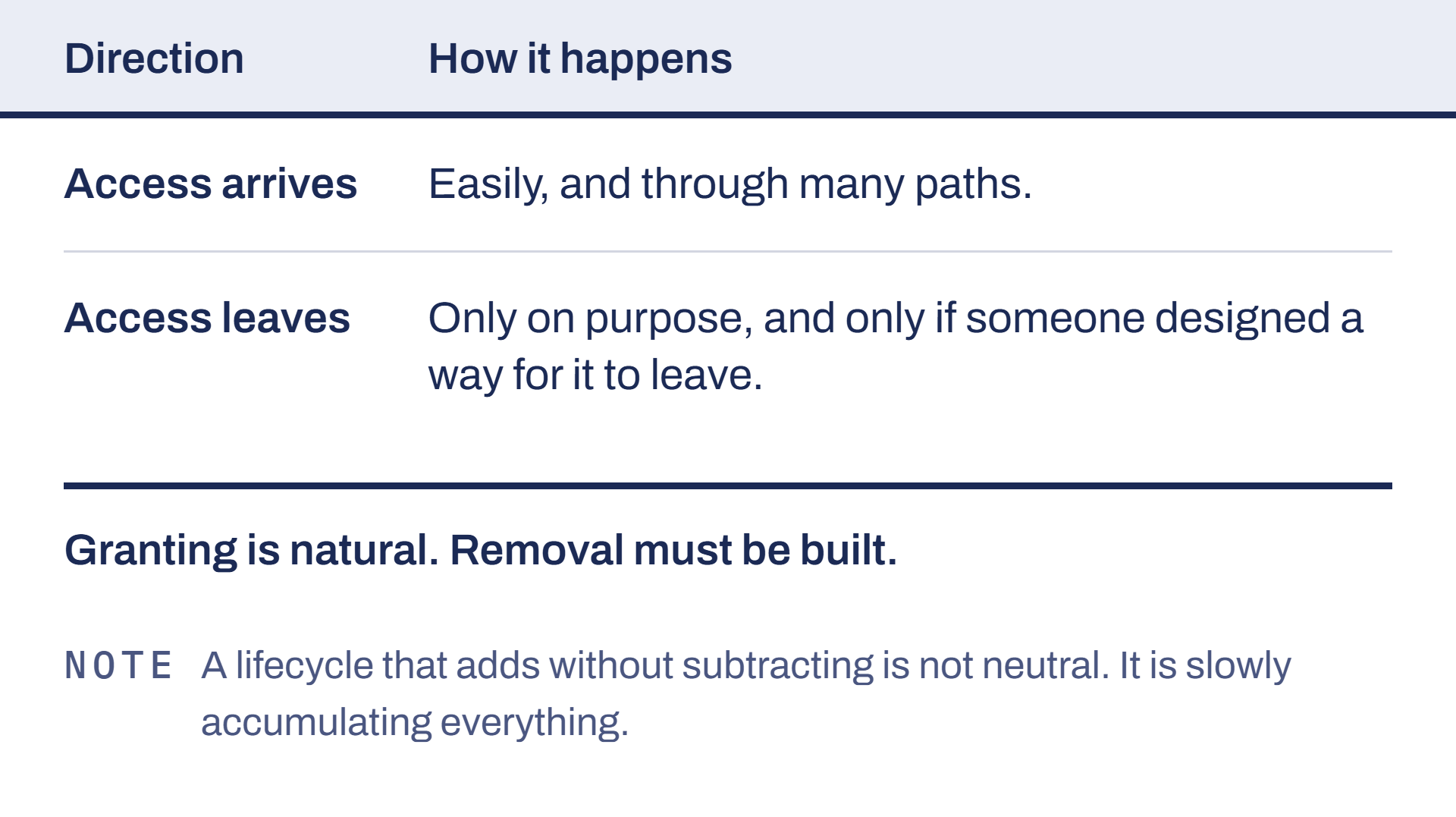
7.1Access arrives through many paths and leaves only on purpose.
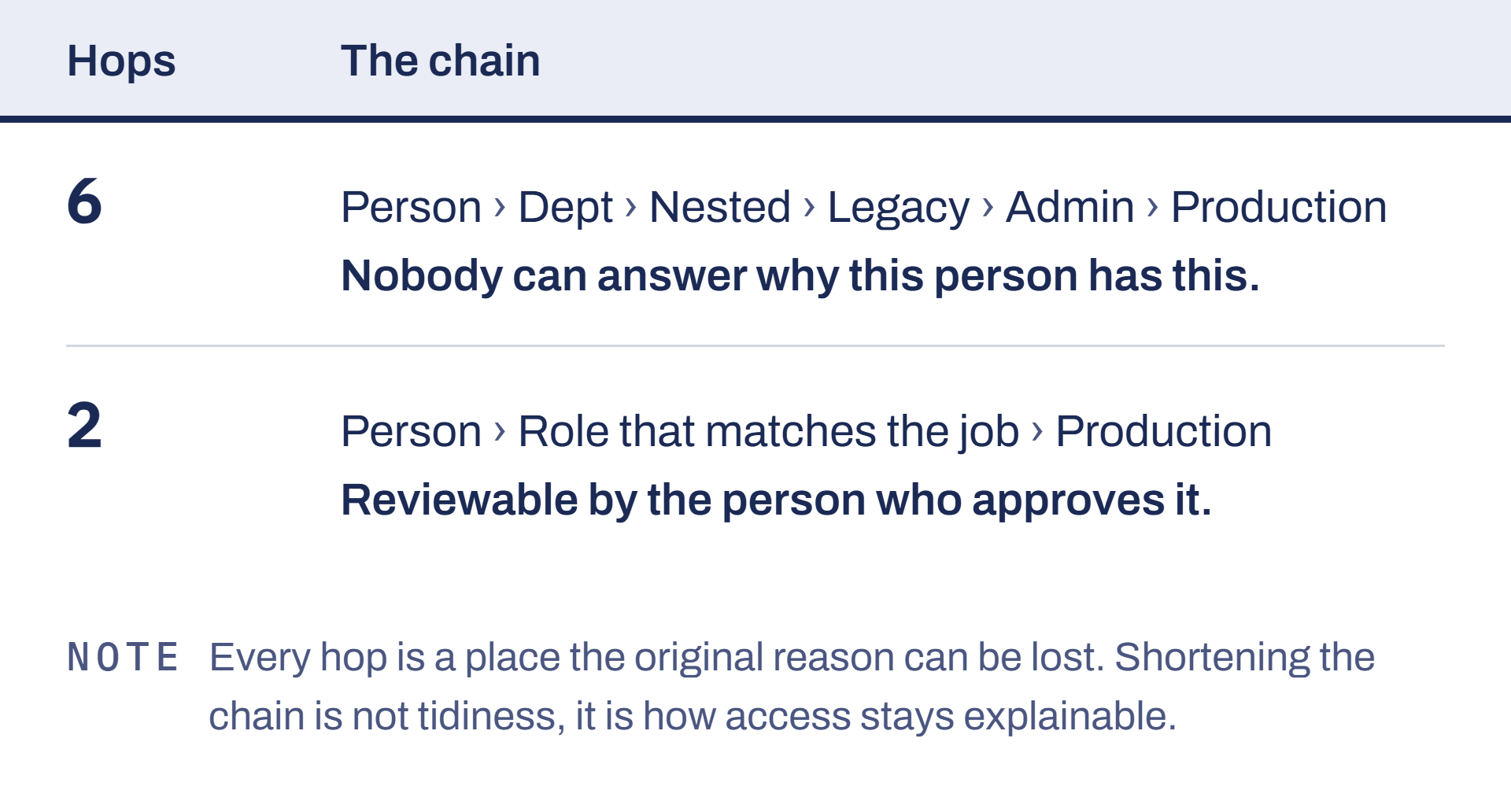
8.1Privilege chains: the same access, six hops and two.
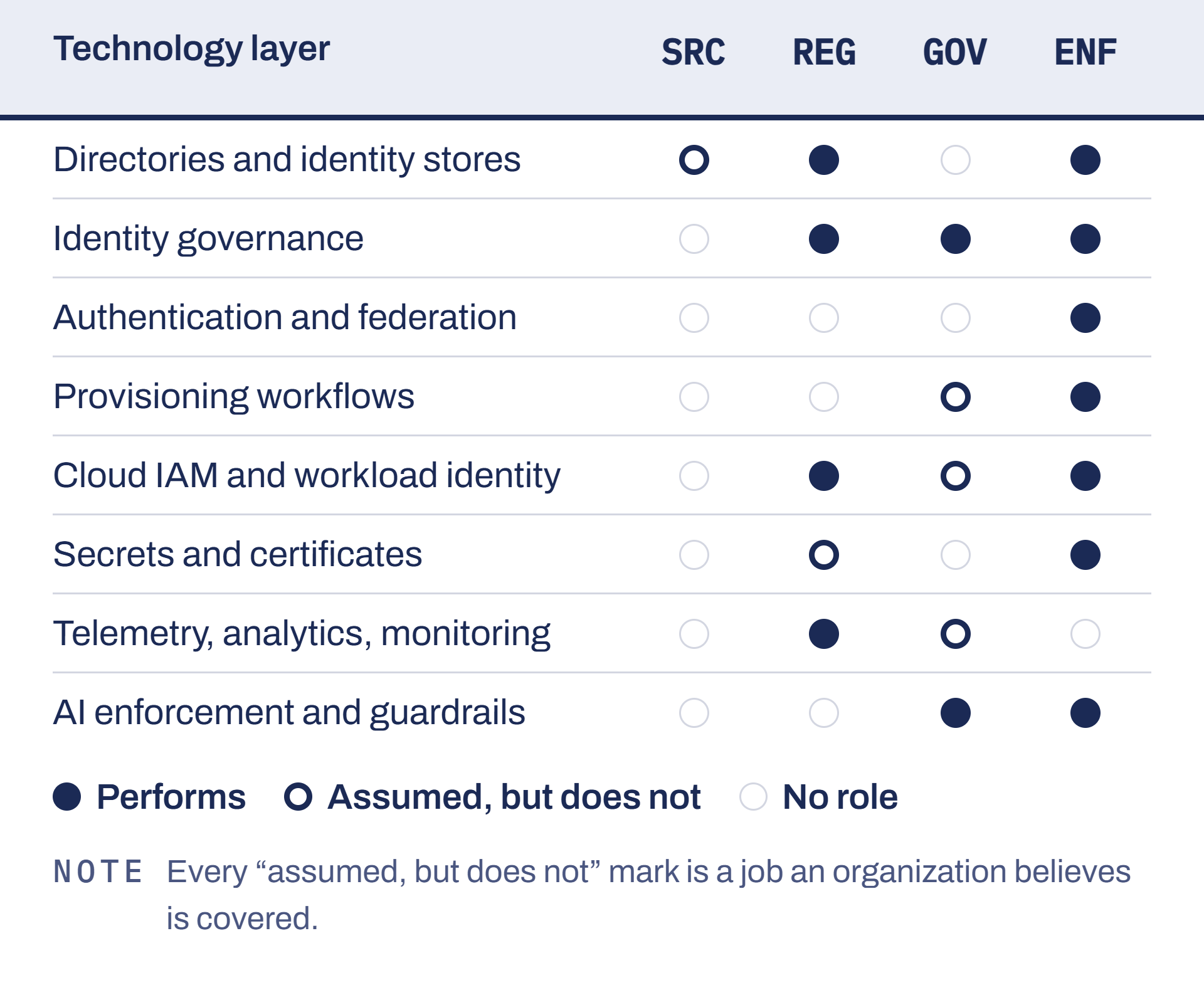
9.1The four jobs of identity, and the technology layers that perform them.
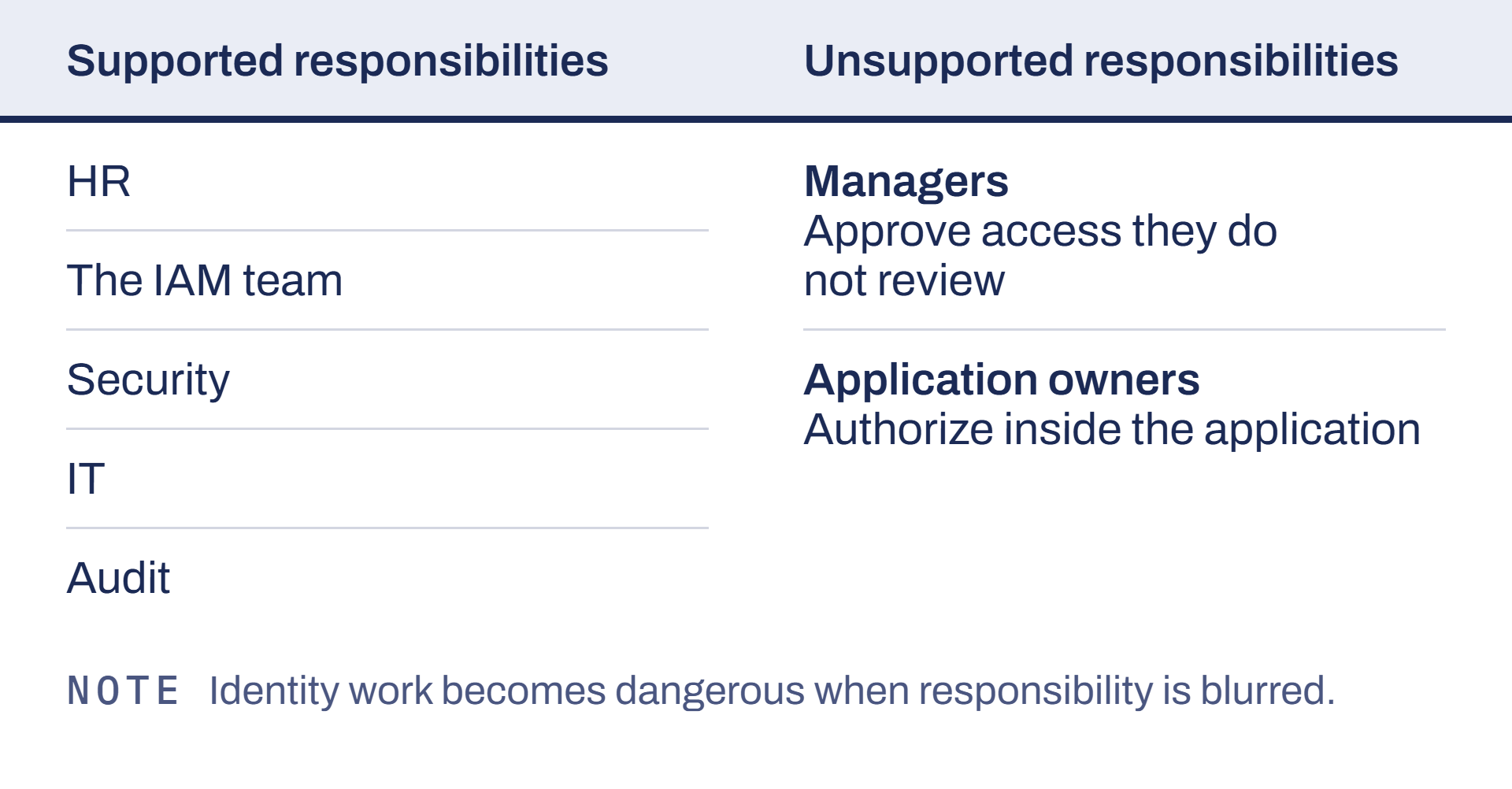
10.1People are asked to carry responsibilities they were never prepared to hold.
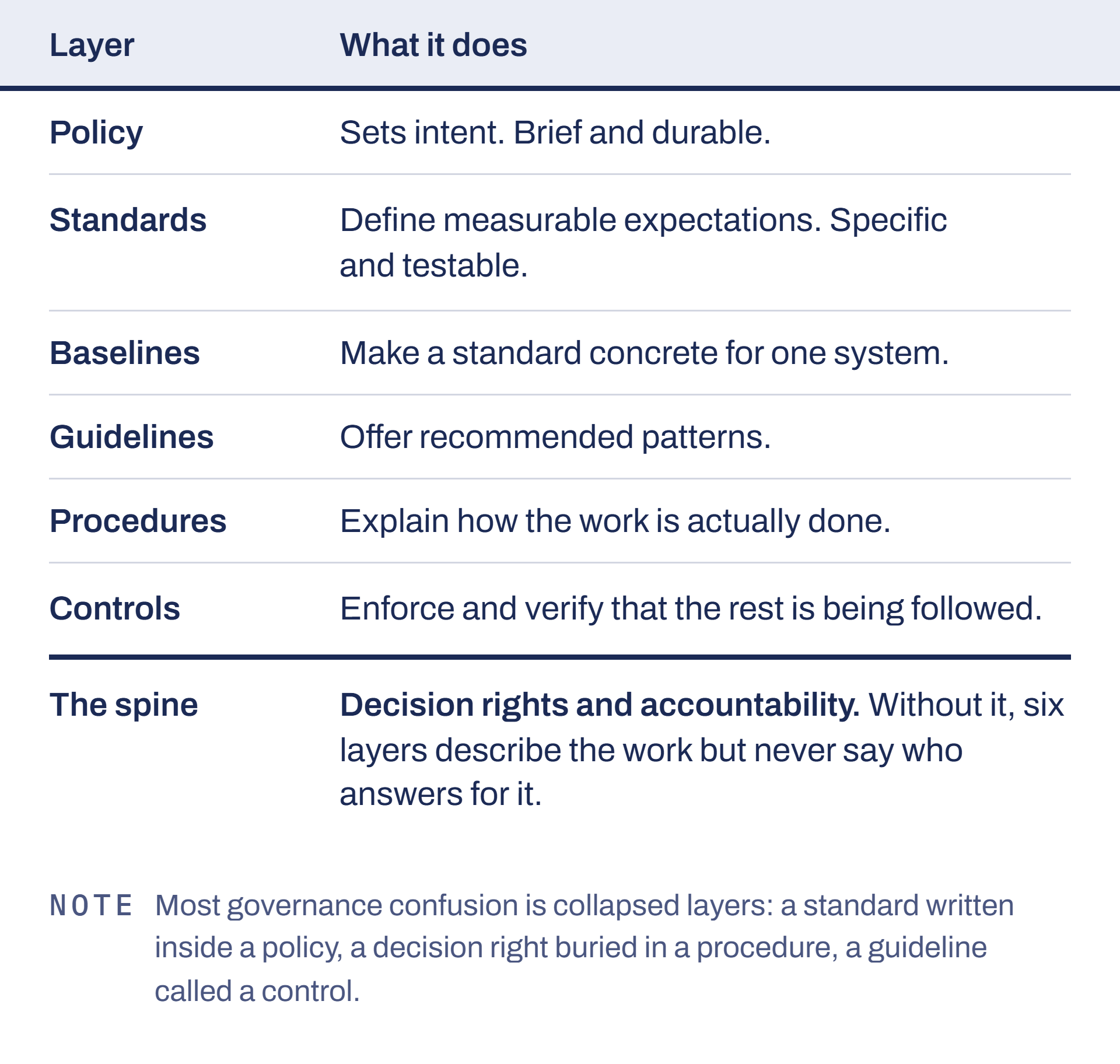
12.1The governance stack, and the layer that holds it together.
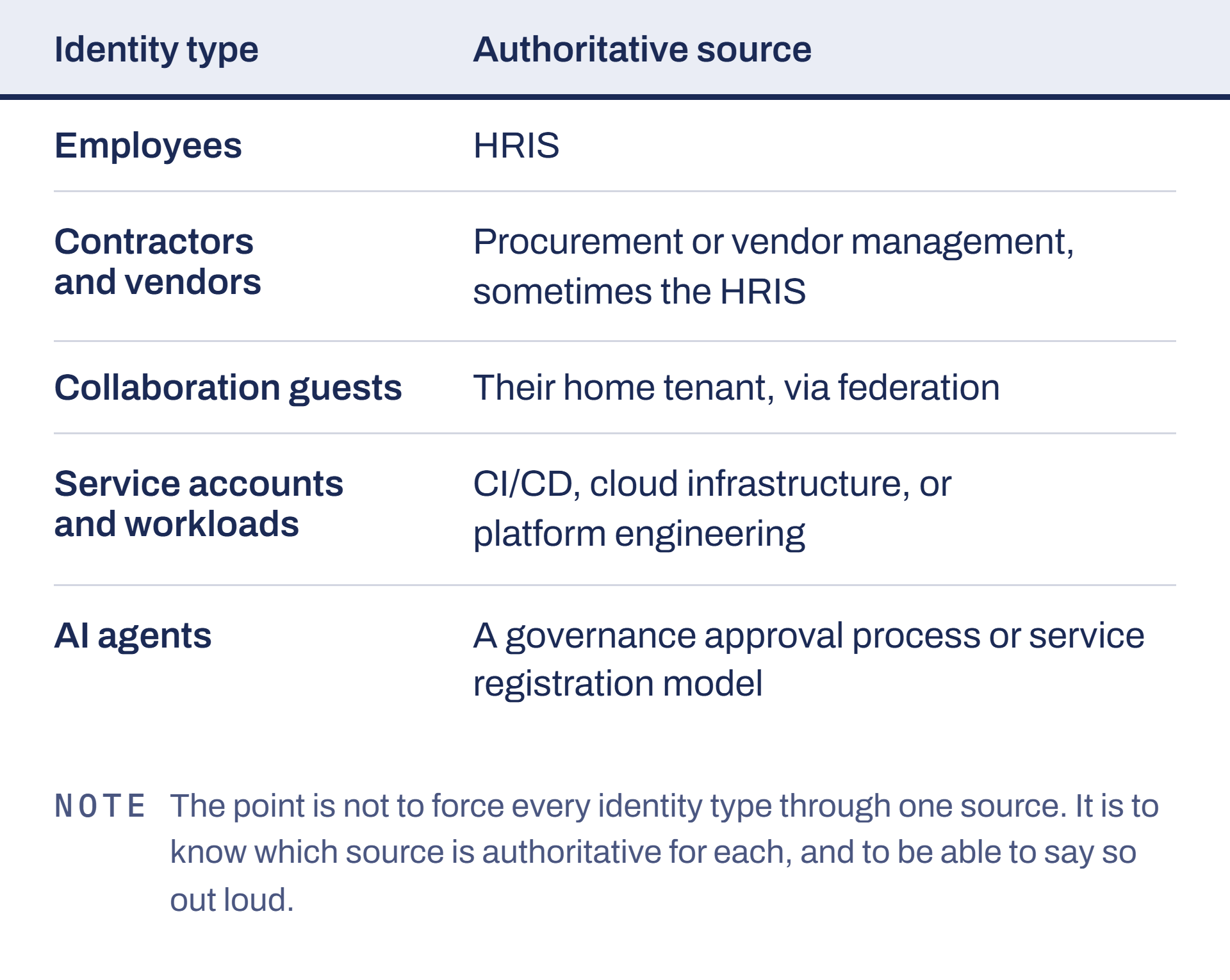
13.1Which source is authoritative, by identity type.
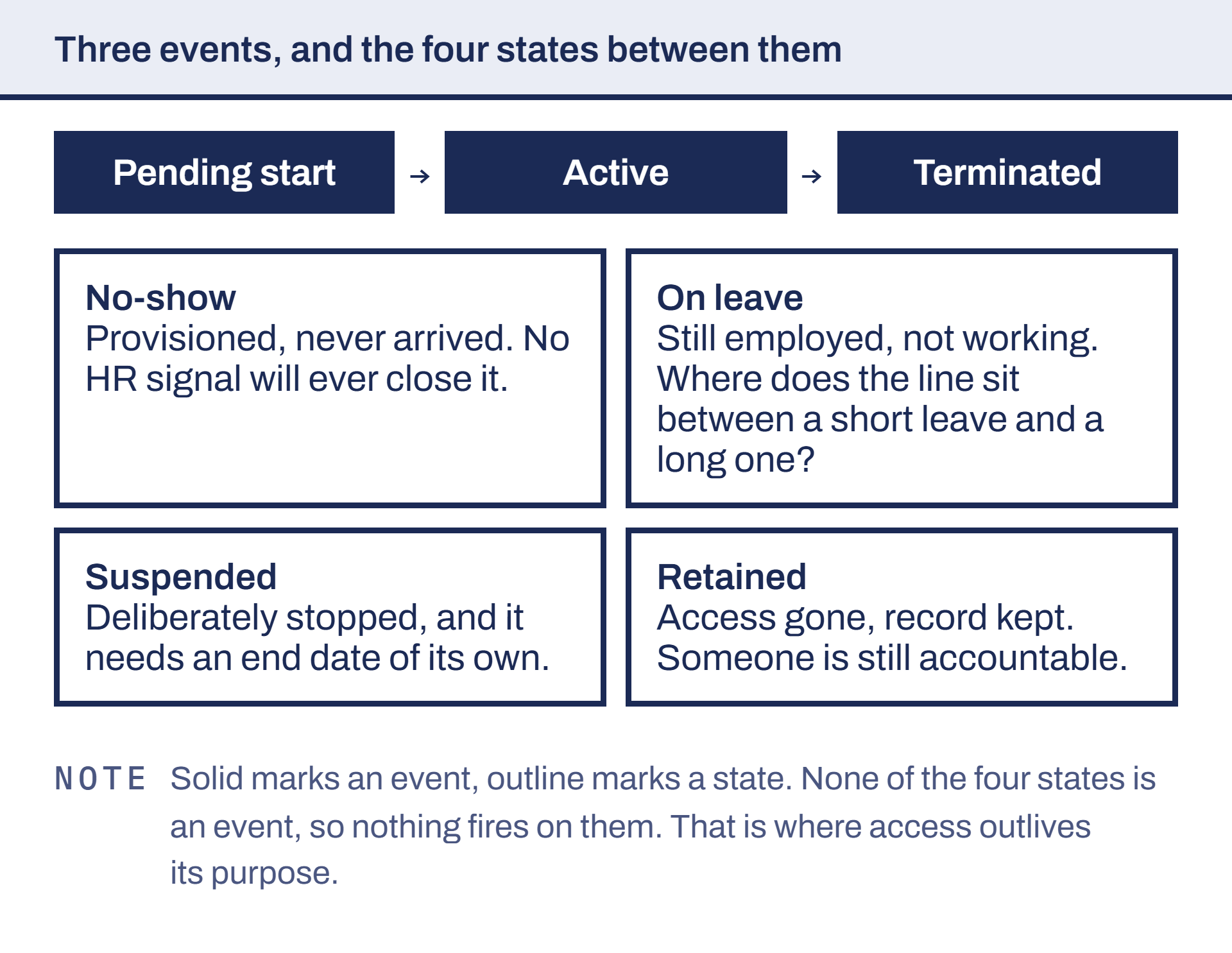
13.2Three events everyone designs for, and the states that get designed by accident.
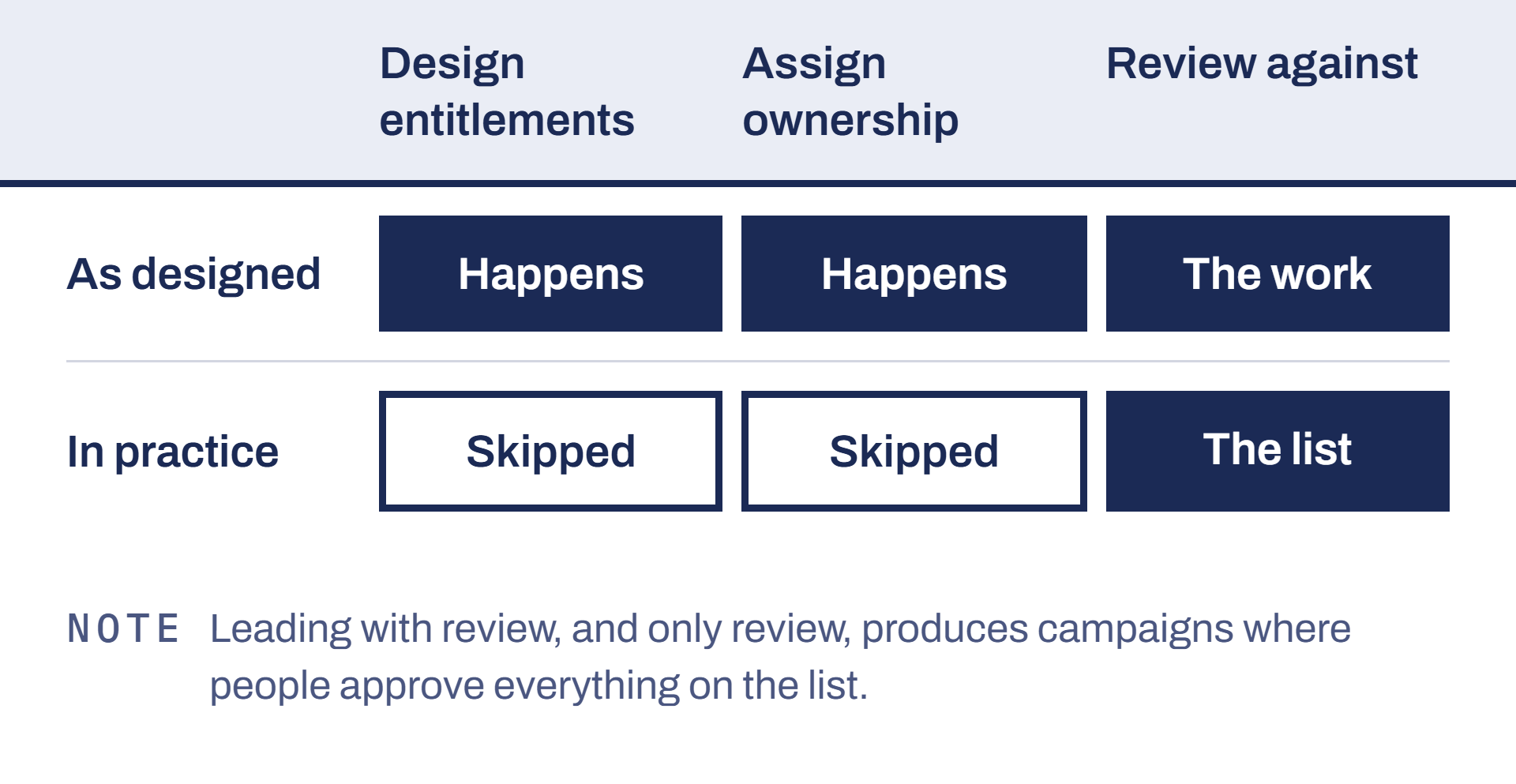
14.1Reviewing the list is not the same as reviewing the work.
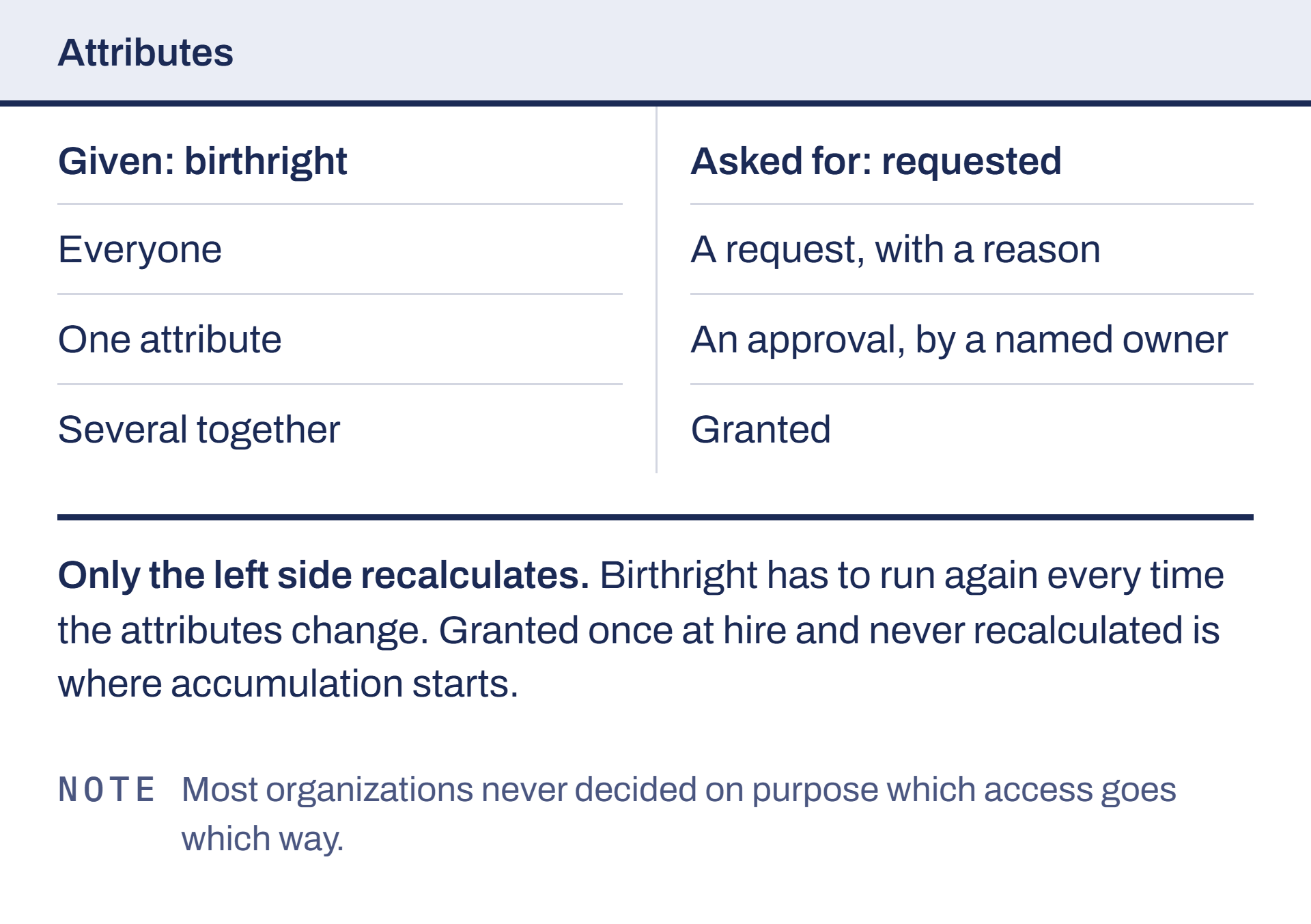
14.2Access arrives two ways. Only one of them recalculates.
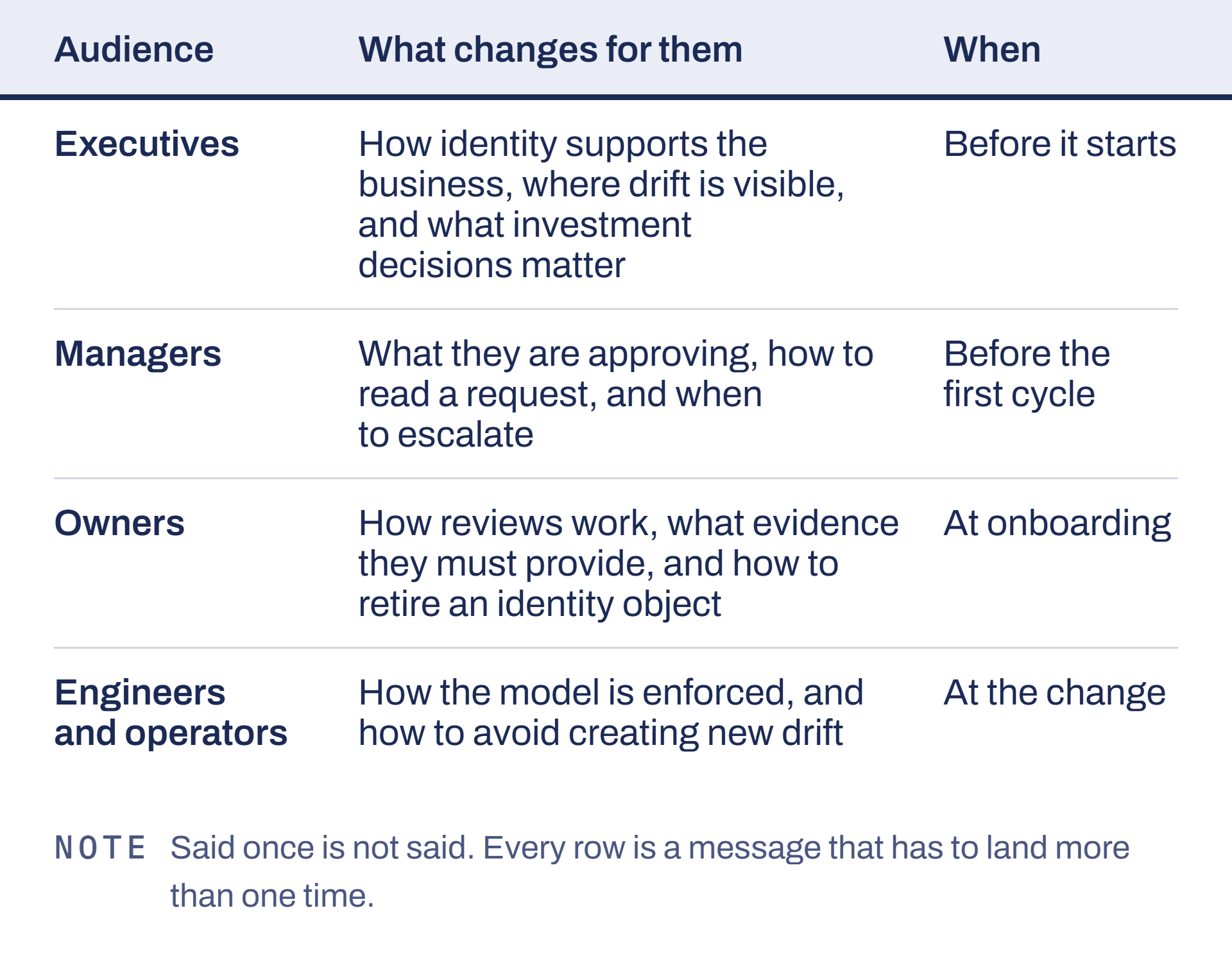
17.1A communication plan: audiences, what changes, and when.
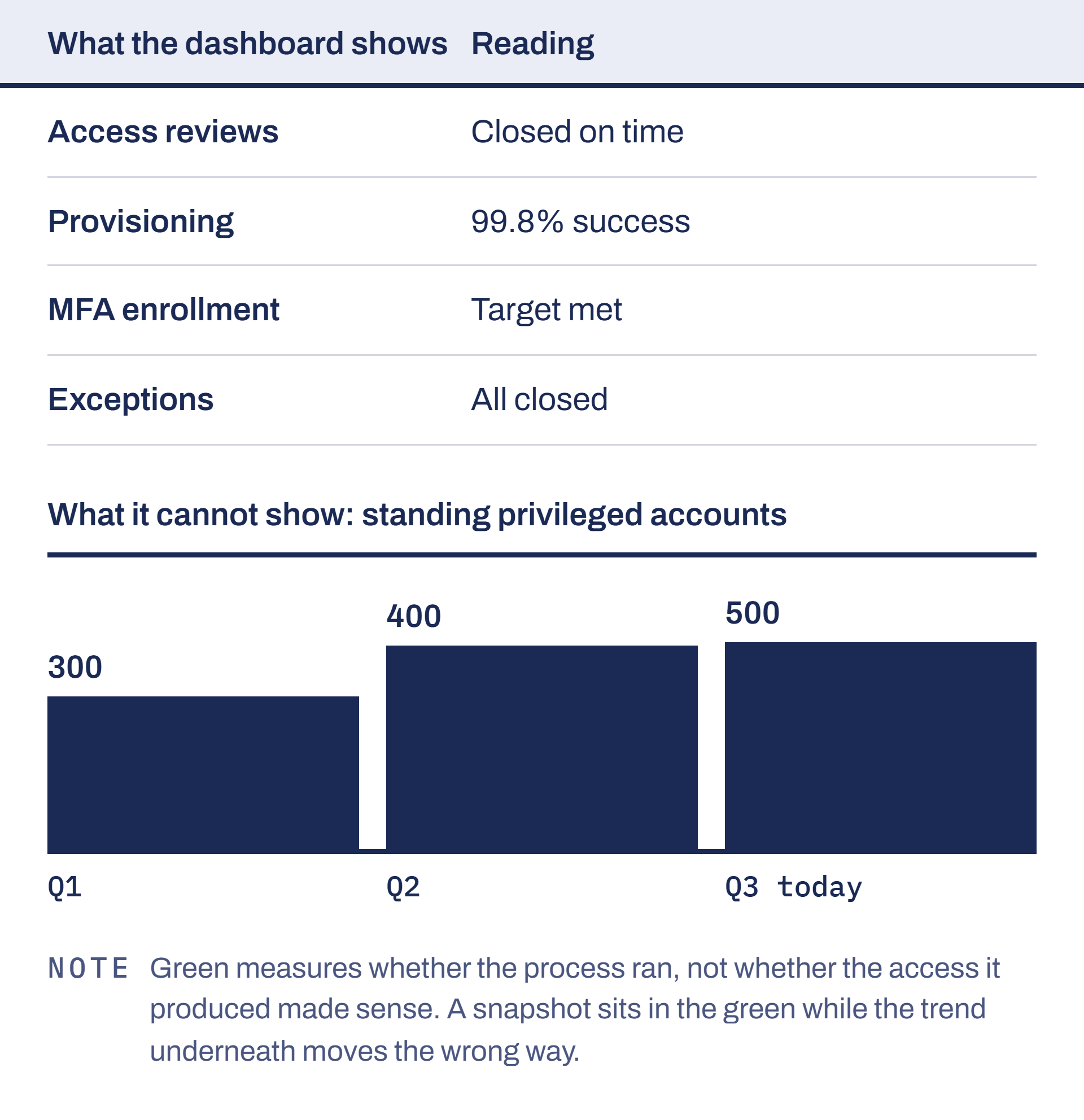
18.1What a green dashboard hides.
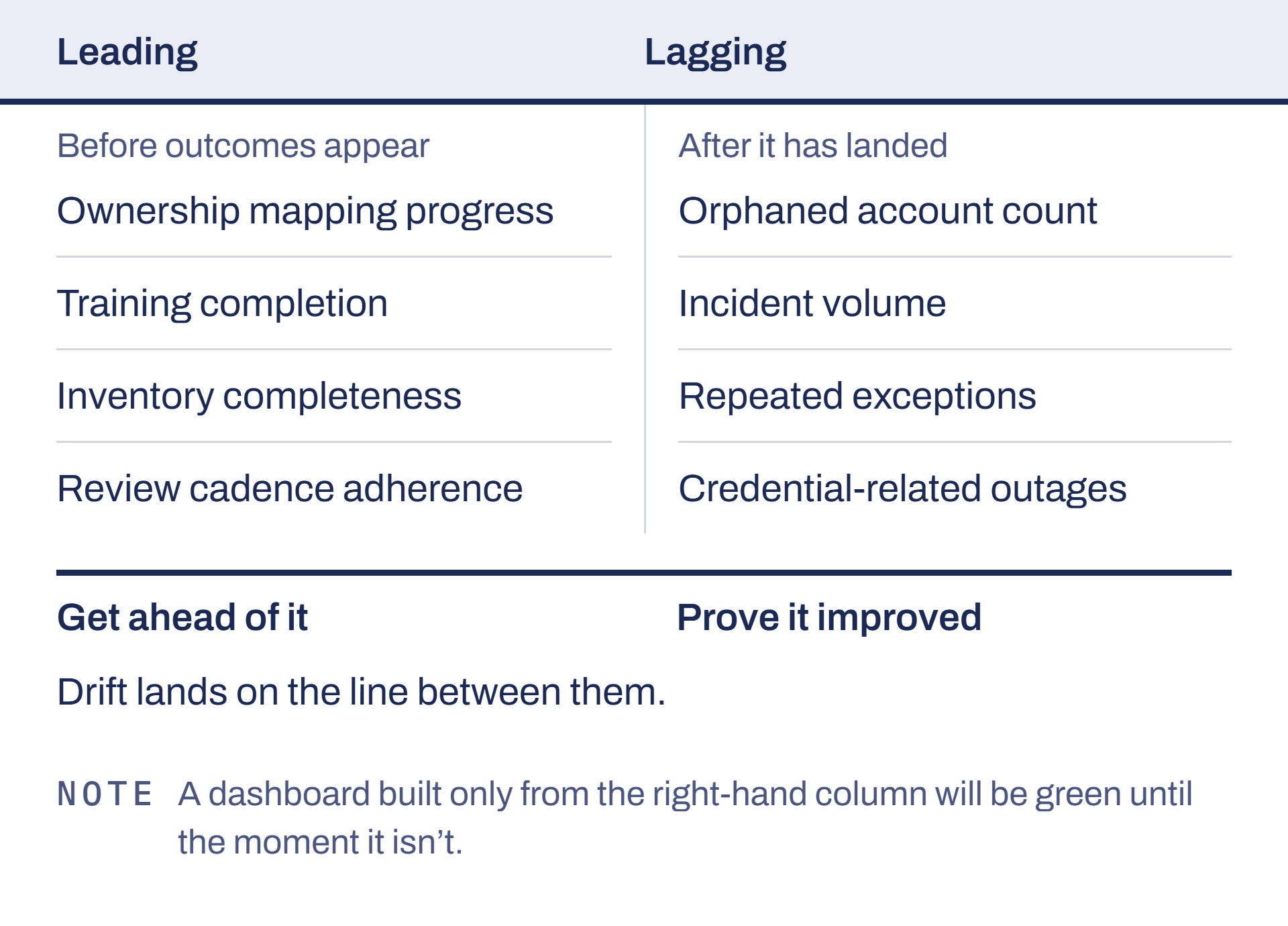
18.2Leading and lagging indicators, either side of the moment drift lands.
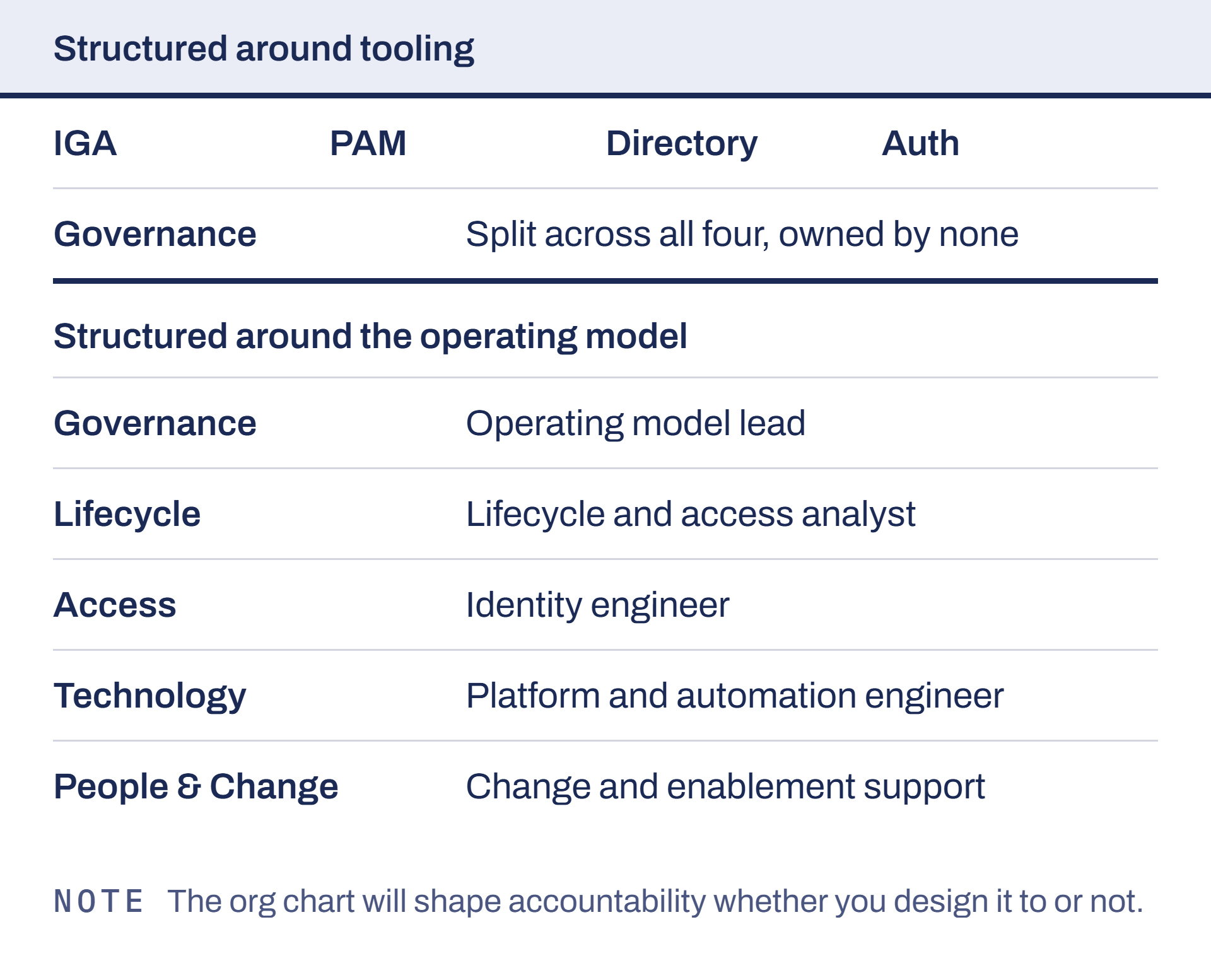
20.1Tool-shaped teams fragment accountability; pillar-shaped teams do not.
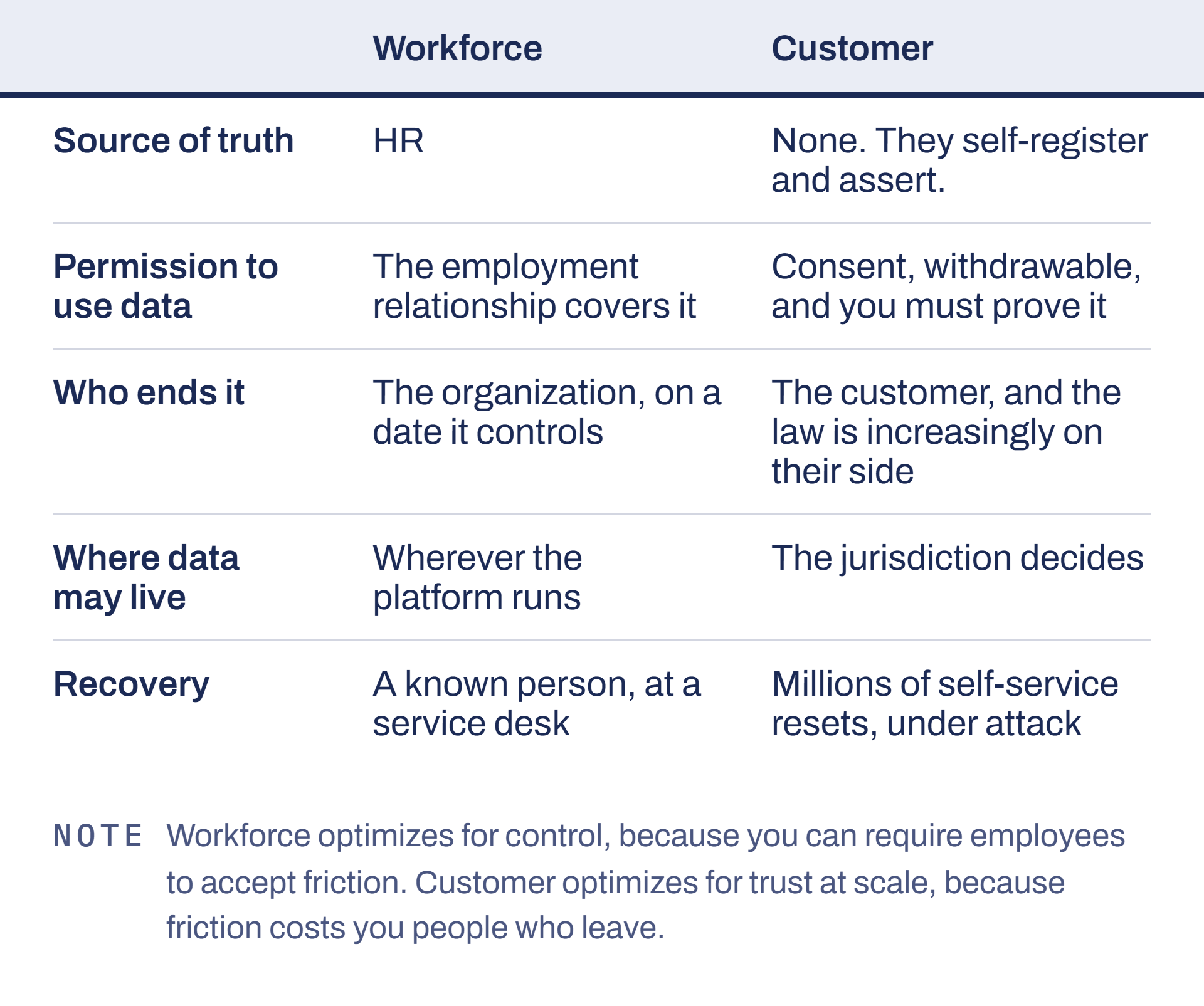
21.1Where the workforce assumptions land for a customer.
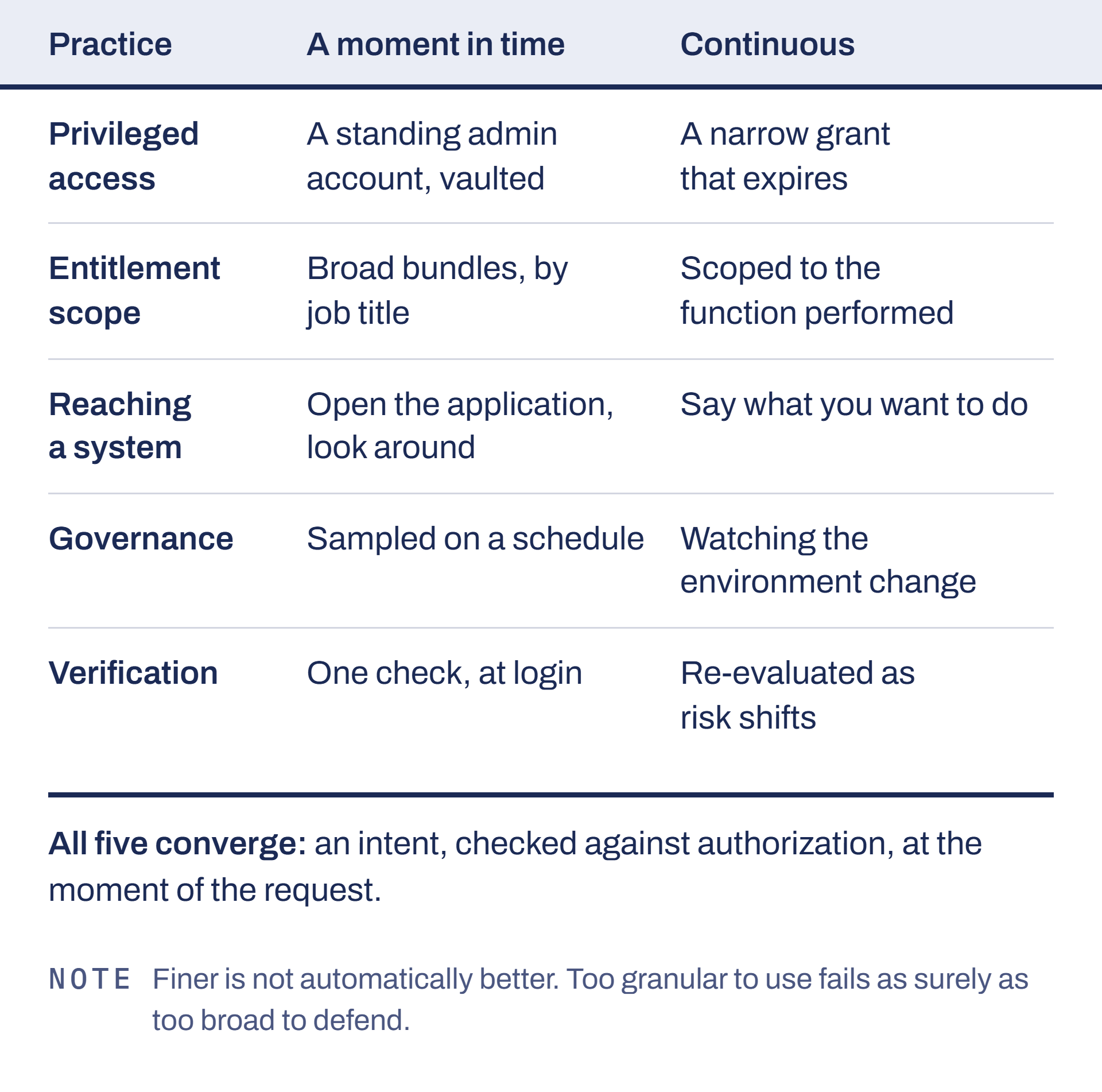
22.1Five practices moving from a moment in time to continuous.
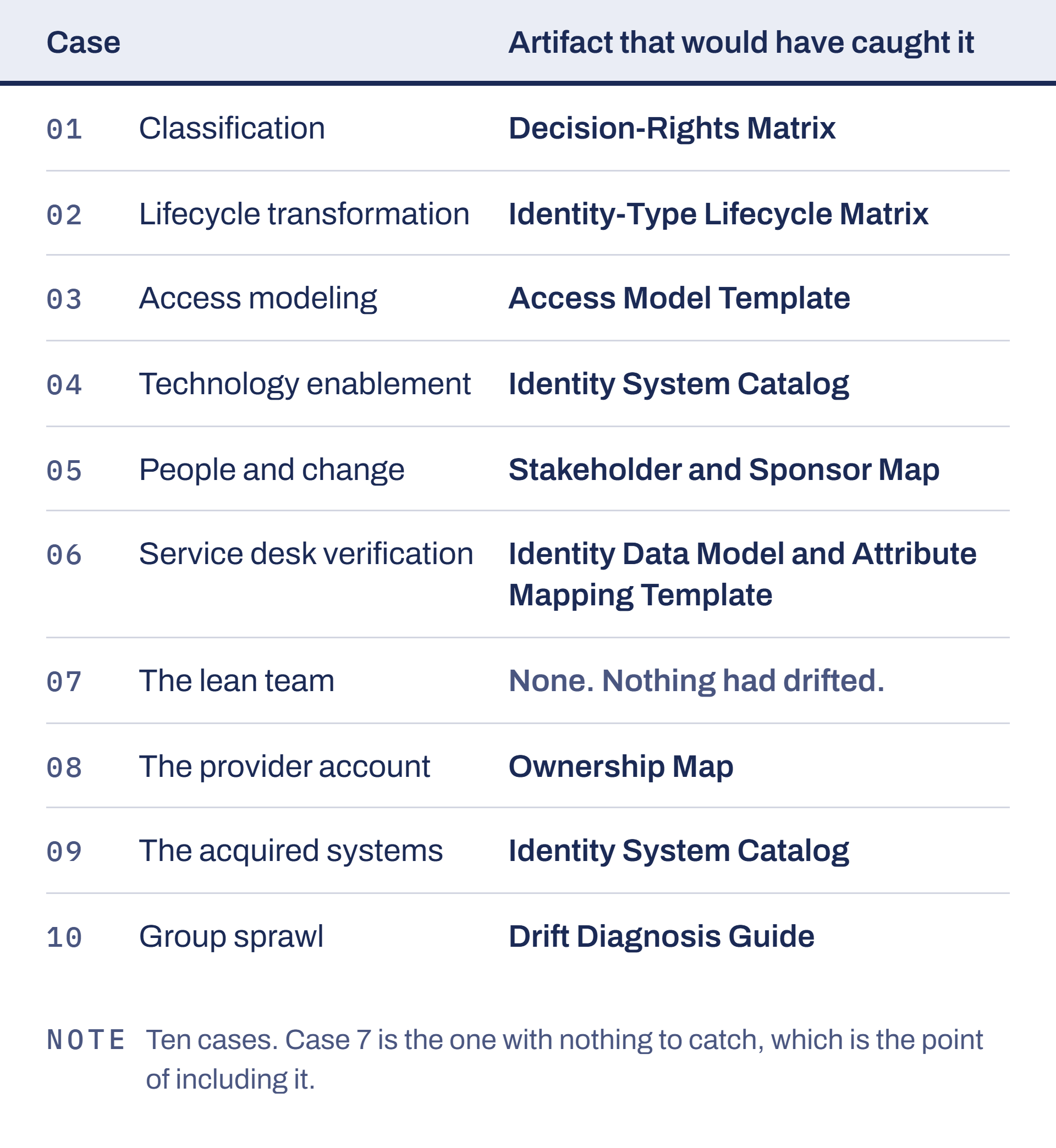
23.1The case studies, mapped to the artifact pack.
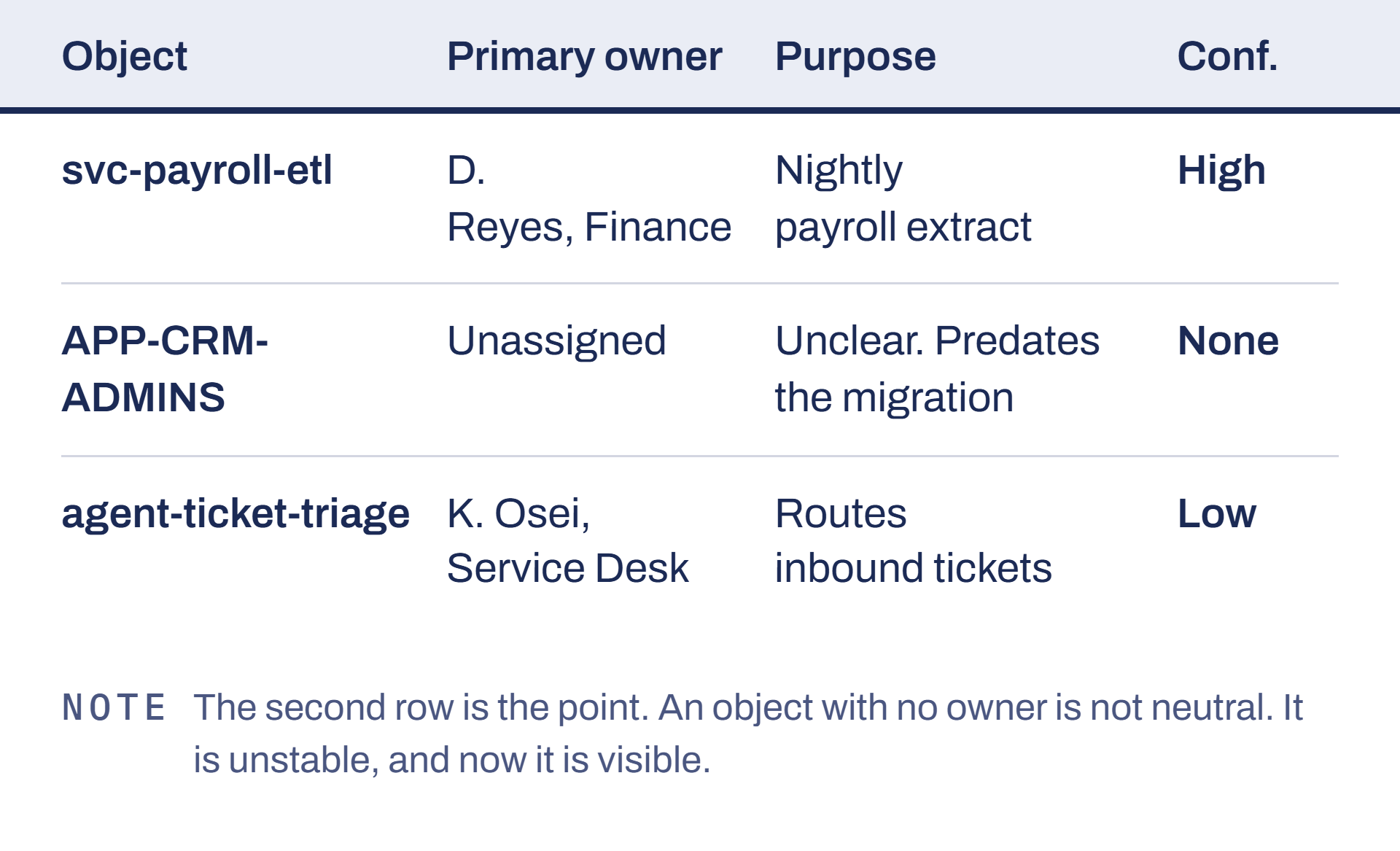
24.1Ownership Map, three rows filled in.
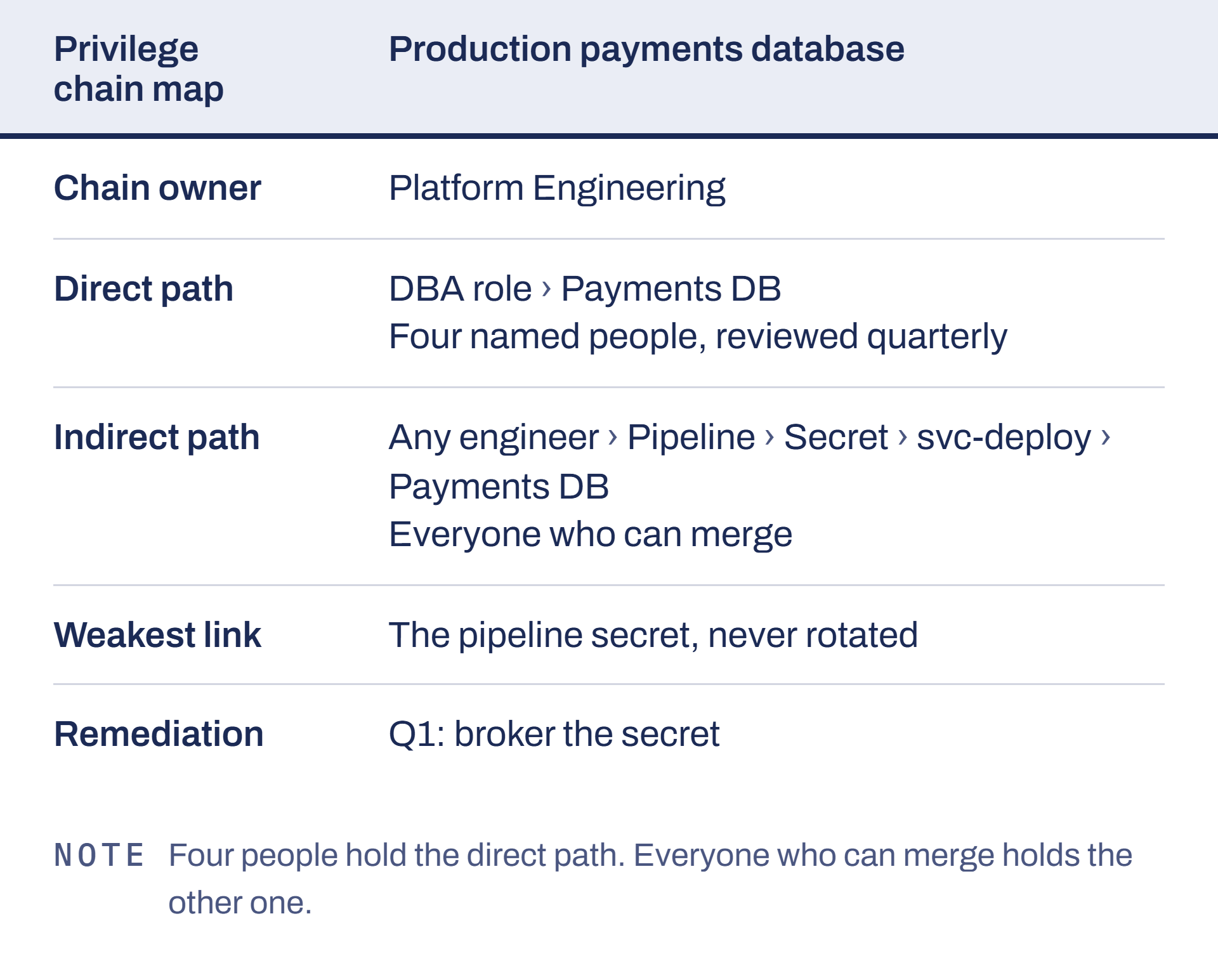
24.2Privilege Chain Map, filled for one asset.
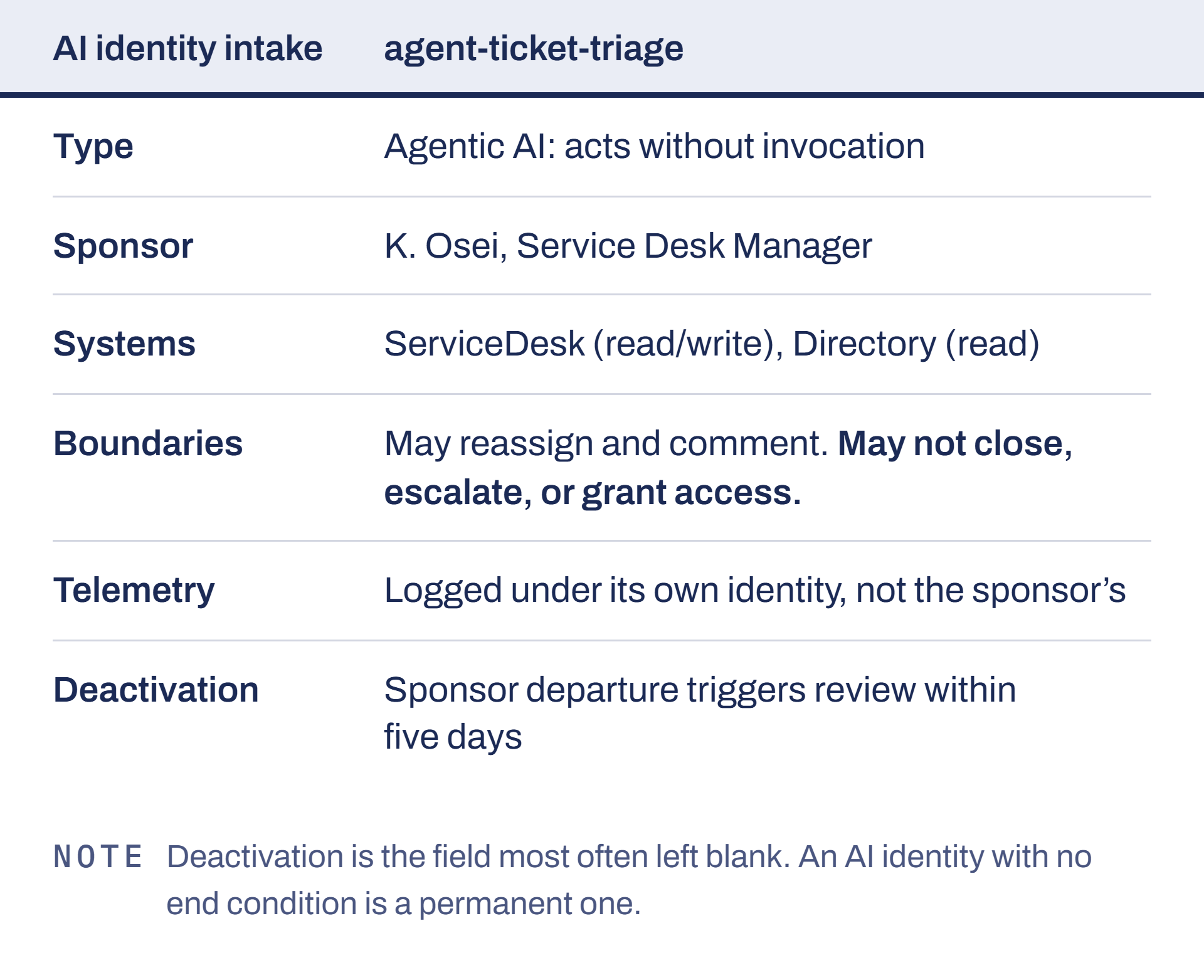
24.3AI Identity Intake Form, six of the twelve fields.
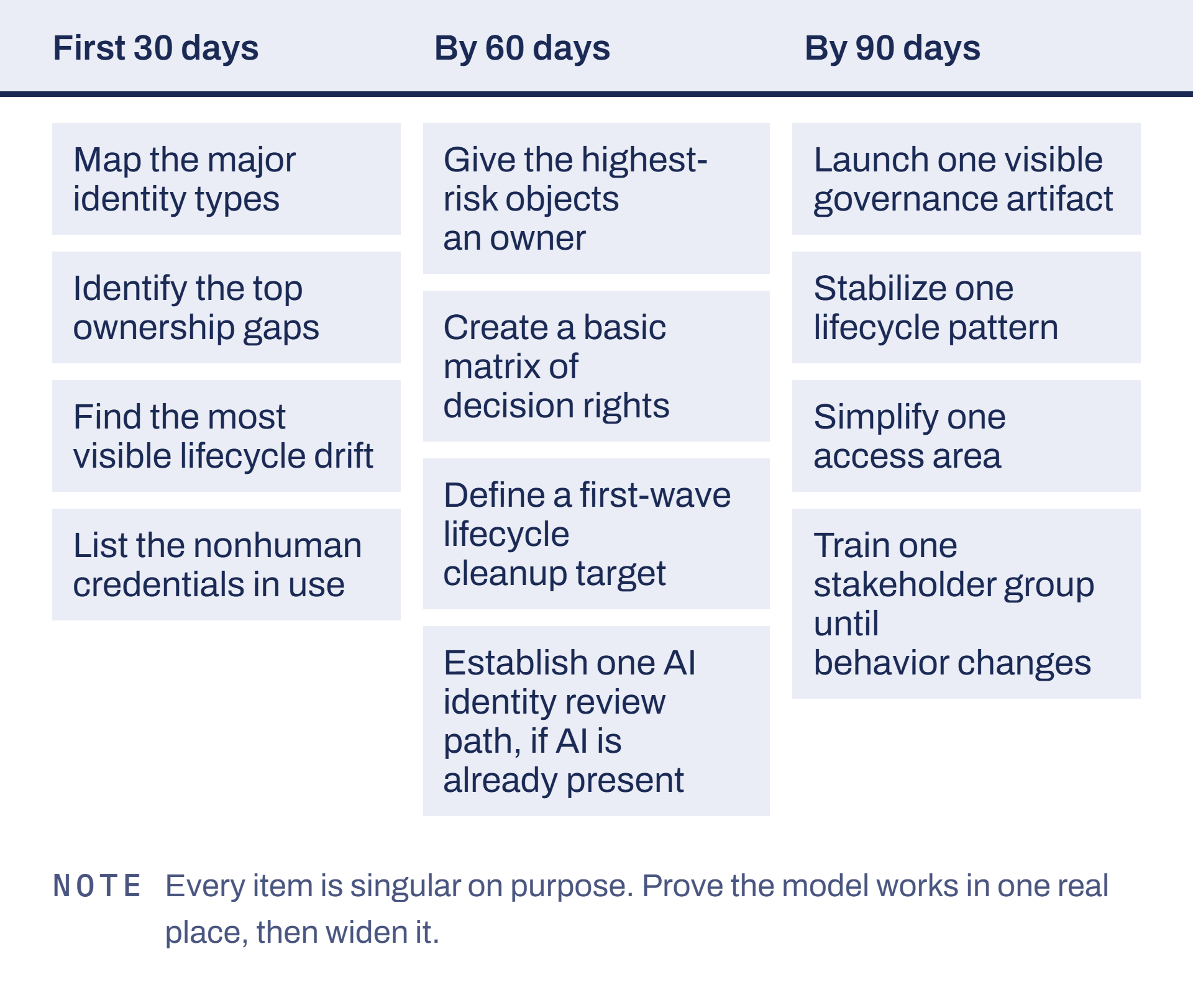
25.1A ninety-day starting point.
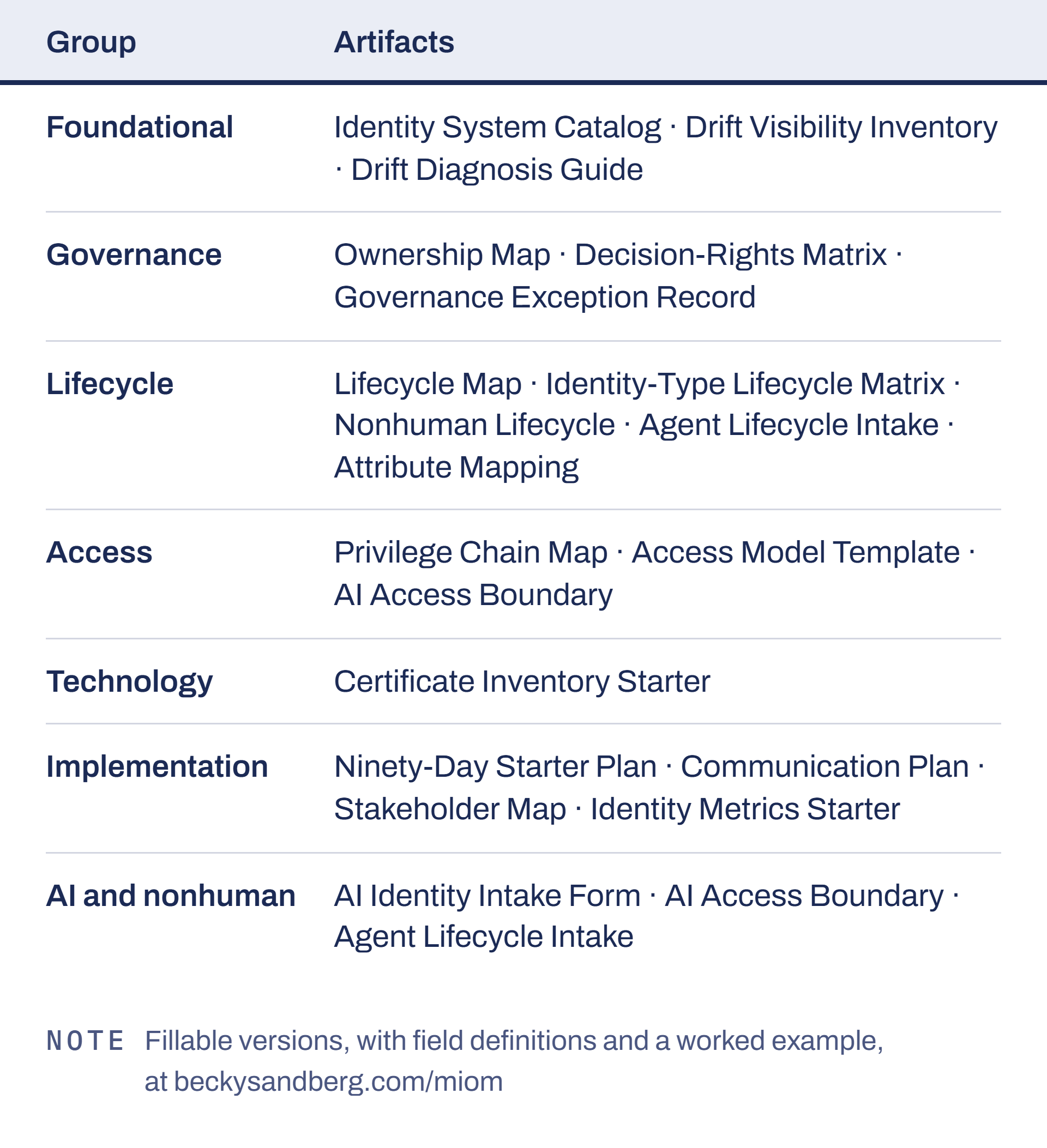
B.1The artifact pack at a glance, grouped by pillar.
Using one of these in a deck or a paper? Please credit The Modern Identity Operating Model by Becky Sandberg. If you want a version sized for a slide or a different background, ask me and I will send you one.